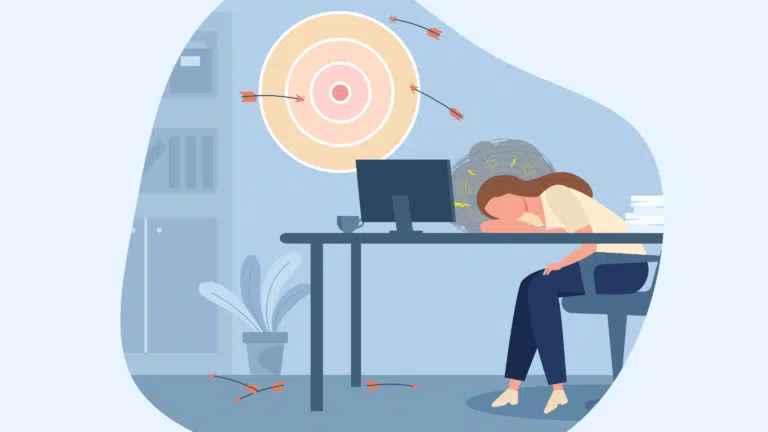

N No matter how you spin it or how prepared you are, difficult conversations always feel a little uncomfortable, and that’s completely normal. After all, we’re only human. But the more experience you gain and the more skills you develop, the easier these conversations become.
OpenUp psychologist Emma White is here to explain why these discussions feel challenging and share practical tips to help you navigate them confidently.
Difficult conversations make us feel vulnerable
“The reason you’re nervous is that you’re being vulnerable,” explains Emma White, a psychologist at OpenUp. “You’re expressing your feelings or addressing how someone’s actions affect you. That can feel risky—like opening yourself up to rejection or hurt.”
As humans, we have an innate need to belong and maintain harmony within a group. Emma adds, “A difficult conversation feels risky because it challenges social cohesion. But in reality, that harmony has often already been disrupted before the conversation even begins. If everything were fine, you wouldn’t need to discuss the first place—whether the other person realises it or not.”
Silence makes things worse
It’s important not to stay silent about issues that matter to us. While the saying goes that silence is golden, it’s not always the answer. What we don’t say often speaks volumes. Unspoken frustrations linger, hanging in the air like a ticking time bomb.
Emma explains, “Avoiding difficult conversations usually creates more problems than facing them head-on. As Brené Brown’s research shows, having the courage to be vulnerable is essential for a fulfilling life. If we don’t dare to engage in these conversations, we remain stuck in a deadlock—our needs go unmet, and our boundaries risk being ignored.”
How to handle the fear you feel before a difficult conversation
It’s always going to be nerve-wracking, but you can learn better ways to manage the fear you feel before a difficult conversation. Emma: “Above all, try to consciously sit with how you’re feeling, what you’re thinking, and how you’re behaving. Recognise that it’s okay – and normal – to find this nerve-wracking, and that what you’re thinking is often a default reaction to a nerve-wracking situation. By observing and experiencing these nerves consciously, you’ll gain more control over the situation and you’ll notice that your nerves decrease.”
Challenging your thoughts can also be a good way to get a better handle on a situation. Ask yourself questions like: ‘What am I really afraid of right now?’, ‘What is the worst that can happen?’, and ‘What is the actual chance of that happening?’.
Emma: “Right before the conversation, it can be helpful to write down everything that comes to mind. When you do this, you’re getting your thoughts out of your head and onto paper, creating more space to approach the conversation with focus and attention.”
Another useful tip is to shift your focus to what you want to get out of the conversation instead of what could go wrong. Emma: “Often we focus all our attention on the nerves we’re feeling. But it can be a relief to think about what exactly the positive outcomes of a conversation like this might be.”
Tips for having a difficult conversation
What’s the best way to prepare for a difficult conversation and what practical things can you do? Emma is here to share her tips.
1. Get things straight in your head: what am I feeling, what do I want, and what is my part in this?
“When preparing for a difficult conversation, you first want to clarify how you’re feeling and what you’d like to get out of the conversation. Also think about what your part is in this scenario because when a conflict occurs between two people, you’ve both played a role.
You can learn a lot by reflecting on this. Is there anything you’d do differently next time? By taking some responsibility, you’ll encourage the other person to do the same.”
2. Look at the situation from the other person’s perspective
“Be as curious as possible. Go into the conversation with the assumption that the other person – just like you – is coming at this with the best of intentions. Be understanding and put yourself in the other person’s shoes. Where is this other person coming from? What are they trying to do or achieve? Often, we don’t want to hurt other people, overstep their boundaries, or do anything we shouldn’t. That’s as true for you as it is for the other person.
However, it’s not always immediately easy to see a situation from another person’s perspective. That’s okay. Ask yourself: how can I develop a mindset that allows me to set my thoughts to one side and be completely curious about this other person’s story?”
3. Listen first and then look for a solution
“You might enter a conversation with a solution already in mind, but this can give you tunnel vision and make you less open to the other person’s perspective. Try to hear each other out first and understand what the other person means and where they’re coming from.
When doing this, don’t just pay attention to what is being said, but how it is being said, in terms of body language, facial expressions, eye contact, emphasis on certain words etc. This often tells you more than the actual words.
Ask lots of questions; this shows that you’re genuinely interested and trying to understand the other person. Do you find this hard? Then imagine that someone has asked you to write this up as a story later. This will make you want to understand and to listen to what the other person has to say.”
4. Take good care of yourself – before, during and after the conversation
“When having difficult conversations, it’s also important to take good care of yourself. Before the conversation, allow yourself plenty of space by taking a moment to exercise, having a drink, writing, getting a bit of fresh air, or doing a breathing exercise. This will help you to enter the conversation with a clear and open mind and to hold your focus better.
During the conversation, a range of emotions may arise; this is normal. Reflect on your feelings, slow down, grab a glass of water, or maybe put the conversation on hold for a moment. Sometimes it’s better to take some time and think about how you want to react, instead of saying something in the heat of the moment that you’ll later regret.
After the conversation, you can reflect on how things went and ask yourself what you learned from it. What went well and what could have gone better? Maybe schedule a follow-up conversation, so you can see how things are going between the two of you and how you want to progress.”
5. Come up with a solution together
“Try to always maintain a ‘together we will find a solution’ mindset. Listen to the other person’s point of view, show that you understand each other, and brainstorm ideas and solutions together. Who knows, you might inspire each other to come up with an even better idea than you could have imagined in the first place. You always accomplish much more with another person.”
Do you need help having a conversation like this?
Having a difficult conversation is always a nerve-wracking affair. It’s great to discuss it or practise it with someone close to you first. Do this with a good friend or colleague, or schedule a 1:1 session with an OpenUp psychologist.