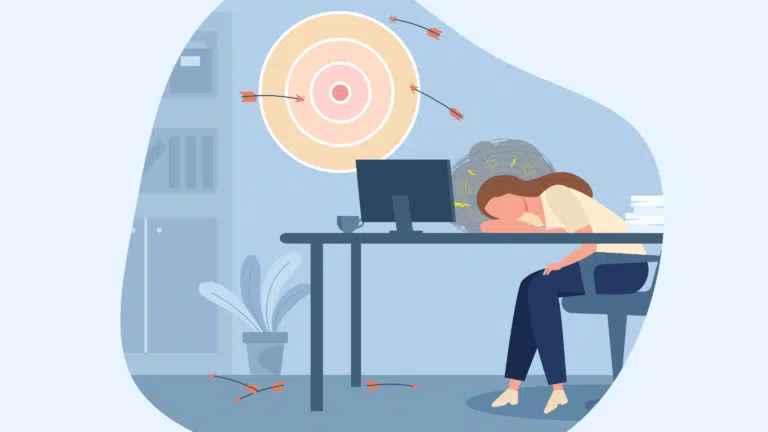

The way you see and think about yourself is completely rooted in your self-confidence. We start forming this image of ourselves at an early age. How that image develops over time varies from person to person and depends on the way those close to you respond to your achievements, how well you did at school, and also the signals you pick up from your social environment.
Pretty much everybody wants to feel like they’re good enough. Seems logical, but it’s not as easy as it sounds. That’s partly because many of us look to external factors to determine our own self-worth, whether that’s what other people think about us, having a good job or maintaining a perfect body. Before you read on, take a moment to consider what these factors might be for you. Which things do you need to achieve before you feel like you’re worthy or good enough?
Conditions of (in)adequacy
Psychologist Carl Rogers labels these factors as the “conditions of worth”: The circumstances, situations and behaviors that we think we need to have in order for other people to like or love us, such as money, beauty and the approval of others.
But what if your self-confidence didn’t depend on any of these factors? What if, regardless of whether or not you managed to land that new job, you simply felt good enough? What if you had a sense of inherent self-worth?
In her TED talk, ‘The Power of Your Inherent Value’, psychologist Meag-gan Ann O’Reilly says these magic words: “If you believe that you are inherently valuable… Period. There’s nothing that comes after that.” There are no conditions you have to meet in order to be valuable. You’re valuable just as you are. With and without your flaws.
Everyone is inherently good enough
So, you’re worthy if you manage to land that promotion. If you don’t get promoted, then maybe there’s a lesson to be learned, but you’re still just as worthy as ever. Regardless of what you achieve (or don’t achieve) your value always remains at the same basic level.
The same goes for your colleagues, partners or the customer service representative you just spoke to over the phone. Nobody is more or less valuable than this basic level of worth and everybody is good enough. Sounds liberating, doesn’t it?
That’s because it is. Research from the University of Michigan found that students who didn’t derive their worth from external factors were generally more comfortable in their own skin and, amongst other things, experienced less stress, achieved better results and established better relationships.
What does knowing your own worth sound like? According to O’Reilly, it’s saying: “This is important to me and I’m going to try my best. And whatever the result is, that says nothing about who I am as a person.”
Dealing with feelings of inadequacy
But the question is: How can you stop yourself from feeling that you’re not good enough? Or better still: How can you practice more self-compassion? There are several things you can do to tackle that voice of self-doubt inside your head.
1. Do something that is in line with your values and interests
We often do things because we think they’ll look good on our resume, make us better versions of ourselves or get other people to like us more. Imagine taking on a promotion even though you know, deep down, that you’re happier where you are, going to the gym five times a week although you don’t really like working out, or attending that party when you actually need some time alone.
Ask yourself when was the last time you did something just because you felt like it or thought it would be fun. Not because other people were expecting it from you or because it was supposedly good for you, but simply because you enjoy doing it. What was that thing? Now go do it.
2. Practise cultivating a positive mindset
Feeling like you’re not good enough is a negative thought. In order to tackle negative thoughts, it can help to cultivate a positive mindset. Shirzad Chamine is author of the bestselling book ‘Positive Intelligence’, which is all about developing a positive mindset.
According to Chamine, in order to tackle your inner saboteurs you first need to become aware of them and be able to name them. Try to identify those moments when you’re feeling like you’re not quite good enough and distance yourself from these feelings. Say to yourself: “Aha! My saboteurs are trying to tell me that I can’t do this, but I don’t have to listen to them.”
Need some more inspiration to help with your mindset? Read our article 14 Books to Change Your Mindset
3. Change the way you converse
If you’re having a conversation with somebody and you start to notice that they’re asking you questions that make you feel like you need to sell yourself to them, try answering a little differently.
Suppose somebody asks you how you are. Try to avoid answers that focus on your job, studies or other labels, and instead talk about something you like about yourself or feel grateful for. So instead of “I have a busy job with loads of responsibilities”, go for “I help our clients to be the best versions of themselves while I’m at work”.
Oh, and before you get started, remember that this is going to take time. Since these thoughts have been a part of your life for so long, they won’t just disappear overnight. You’re allowed to make mistakes because you’re still absolutely fine the way you are. Would you like some support or to just have a chat with somebody? Book a consultation with one of our psychologists.
👉 Also check out: 5 Tips to Stop Your Chronic Worrying