
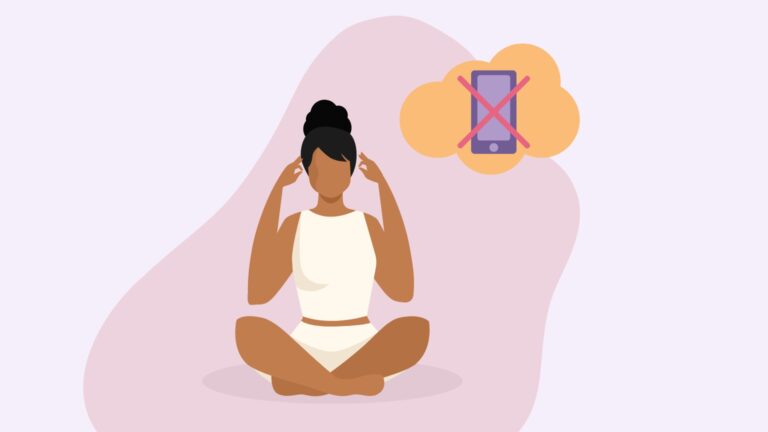
Ping! Another notification. And then the endless scroll that was meant to last five minutes but somehow became an hour. Sound familiar? If yes, it might be time for a digital detox.
But don’t worry, we’re not suggesting you throw your phone into the sea! This 5-day digital detox challenge breaks down digital well-being into simple daily tasks that require minimal effort but create meaningful change over a week.
How the Digital Detox Challenge Works
- 5 Days of easy, research-backed digital detoxing
- Free tools: quizzes, guides, mindfulness, and reflection prompts
- No guilt or off the grid, just awareness, and a fresh digital start
It encourages awareness, boundary-setting, and healthy habits to reduce screen fatigue and improve focus and mood. Ready to start your digital detox? Let’s kick things off with day one, where you’ll take a quick quiz to reflect on your relationship with your phone.
Day 1: Phone Addiction Quiz
Challenge:
📱 Take the “Phone Attachment” Quiz to find out how your phone habits are really affecting you.
How attached are you to your phone? Your digital detox journey begins with a simple but powerful step: awareness. You might be surprised by your quiz results! Many people underestimate their screen dependency until they see the numbers.
Phone Addiction Quiz
Are you addicted to your phone? Find out in less than 5 minutes.
This quiz is inspired by validated tools such as the Smartphone Addiction Scale (SAS), with added insights from OpenUp psychologists (please note that the quiz is not a diagnostic tool). No apps for digital detox are required, just honesty and a willingness to reflect. Though if you’d like, a digital detox app can help track your progress in the coming days.
Ready for Day 2? We’ll build on today’s insights and take your first practical step toward digital balance.
Day 2: Digital Declutter Day
Challenge:
🧹 Clean out at least one digital area such as your phone apps, email inbox, or desktop clutter.
Now that you’re aware of your digital habits, it’s time to create some breathing room. Day 2 of your digital detox focuses on clearing the digital noise that constantly competes for your attention.
Digital Declutter Checklist
Download this checklist and start your digital declutter.
Think of your phone and computer like your living space. When they’re cluttered, your mind feels cluttered too. Detoxing digitally starts with simplifying what you see when you look at your screens.
Ready for more? Day 3 brings an exciting challenge that builds on your decluttering success.
Day 3: Mindful Scrolling Swap
Challenge:
🧘 Swap 10 minutes of scroll time for 10 minutes of mindfulness.
Day 3 of your digital detox introduces a powerful exchange: replacing mindless scrolling with mindful moments. Have you noticed how automatically your thumb moves to open social media when you’re bored or uncomfortable? Today, we interrupt that pattern with intention.
Gratitude Journaling Prompts
Use these to replace endless scrolling with meaningful reflection.
You can also try this short guided mindfulness practice to take a break from your screen:
Ready to take this digital detoxing journey deeper? Day 4 builds on today’s mindfulness practice with a healthy bedtime routine.
Day 4: Sleep Clean-Up Routine
Challenge:
🌙 Go screen-free for 1 hour before bed.
On day 4 of your digital detox, we’re focusing on creating a bedtime routine that promotes deep, restorative rest. The goal? Create a 60-minute buffer between screens and sleep. This might sound challenging at first, but the digital detox benefits for your sleep quality are truly worth it.
To make that easier, we’ve included calming tools like a simple breathing technique, a gentle stretch sequence, and a soothing sleep meditation audio. These screen-free rituals help your mind and body wind down.
Screen-free Bedtime Routine
Instead of scrolling until your eyes get heavy, try this guide with great alternatives.
Many people find that digital detoxing at night is the most impactful part of their detox journey. Your brain finally gets permission to wind down properly. If complete silence feels uncomfortable, try a sleep meditation or gentle nature sounds. Just make sure your device is out of arm’s reach and on “do not disturb” mode.
Next, we’ll shift the focus inward. Day 5 is all about reflection and creating digital habits that actually last.
Day 5: Reflection and Reset
Challenge:
✍️ Take 10 minutes today for self-reflection. Grab our “My Digital Reset” template and fill in the prompts.
Congratulations on reaching the final day of your digital detox challenge! Today is about reflecting on what you’ve learned and creating a sustainable path forward. So, does digital detox work? By now, you’ve likely noticed some changes in your mood, focus, or sleep. These personal insights are your most valuable takeaways.
Remember, knowing how to digitally detox isn’t about perfection. It’s about intentional choices and regular resets when needed.
What Comes Next?
Over five simple steps, you’ve made space for more calm, awareness, and intention in your digital life. Whether you noticed better sleep, less anxiety, or just enjoyed a few screen-free moments, those are real wins.
The goal isn’t to stay unplugged forever. It’s to stay connected to what matters most, online and off.
Want to keep the momentum going?
- Revisit your Digital Boundaries Blueprint once a week.
- Share the challenge with someone who might need it.
- Save your favorite PDF or practice for future resets.
- Tag your journey with @OpenUp and #DigitalDetoxChallenge and inspire someone else to start theirs.
And most importantly: come back to this anytime your digital world starts to feel a little too loud.
Want to talk to someone about your screen time and mental well-being? You don’t have to figure it out alone, our psychologists are here for you.