


One connected approach to prevention and support
The PMO is part of a broader OpenUp ecosystem that helps organisations support mental well-being, prevention, PSA compliance, and employee care in one place.

On-site PMO
A full on-site health check performed by lifestyle doctors and experts. Preventive and personal, with direct guidance and follow-up via the OpenUp platform. So you identify risks early and prevent absenteeism.
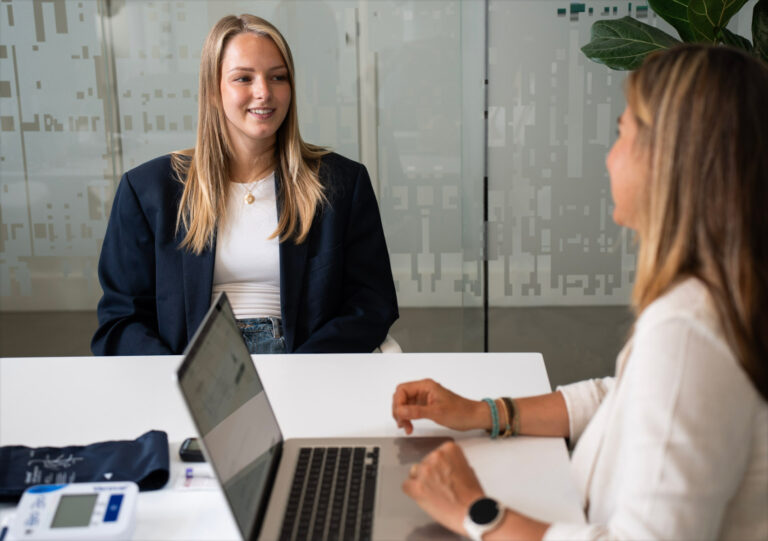



The OpenUp PMO includes a digital Vitality Check, on-site clinical measurements, and ongoing follow-up through the OpenUp platform. The setup is modular, so you can shape it to your company’s needs.
Once the cycle wraps up, HR receives an anonymised, company-wide report on where the organisation stands.
The ePMO is fully digital. Employees complete the Vitality Check questionnaire from anywhere, and HR receives an anonymised report focused on psychosocial workload (PSA), lifestyle, and well-being. The PMO is on-site and broader: a company doctor or occupational health nurse runs physical checks including blood tests, blood pressure, hearing, and muscle strength, alongside the same digital Vitality Check.
The legal difference matters too. Only the PAGO (Periodiek Arbeidsgezondheidskundig Onderzoek) is required under the Arbowet. A PMO that integrates the PAGO elements (the work-related risks from your RI&E) covers that legal obligation in one go.
An ePMO strengthens the PSA part of your prevention policy but does not replace a PAGO on its own, because physical and chemical workplace risks still require a company doctor.
In practice, many employers combine the two: a PMO for the full preventive picture (and PAGO coverage), with an ePMO between cycles to keep PSA continuously in view.
No. Individual results, both from the questionnaire and the physical measurements, stay private with the employee. HR only sees aggregated, anonymised data at the organisation level, showing patterns across the workforce. Reports only appear once enough employees have participated to keep individuals unidentifiable. This separation is what makes the PMO trustworthy for employees and useful for HR at the same time.
Yes, as an option. The on-site PMO includes a blood panel covering cholesterol, HbA1c (long-term blood sugar), and vitamin levels. Samples are taken in advance, either at your workplace or through a home test kit, so results are ready in time for the consultation. Employees receive their results with an explanation of what the numbers mean, and if a result needs follow-up, they can speak with a psychologist or lifestyle expert through the OpenUp platform.
Not in itself. What the Arbowet (the Dutch Working Conditions Act, article 18) requires is the PAGO, a periodic health check focused on work-related risks identified in your RI&E (risk inventory). A PMO is not independently required, but when it integrates the PAGO elements, it covers that legal obligation in a single, broader check. That is why many employers offer a PMO rather than a standalone PAGO: same legal coverage, more useful insights, better experience for employees. Some collective labour agreements (CAOs) also require a PMO in specific sectors, so check yours.
For employees, participation is always voluntary, whether you offer a PAGO, a PMO, or an ePMO.
Yes. The Vitality Check questionnaire and the standard on-site measurements form the core, and you can adjust which physical measurements are included and add company-specific themes. OpenUp’s team helps configure the setup during onboarding so the PMO matches your workforce, your sector, and any specific risks you want to track.
Yes. The PMO is built to connect measurement directly to action. When an employee’s results suggest support would help, they can book a session with a psychologist or lifestyle expert through the OpenUp platform straight away. There is no separate referral process, no waiting list, and no additional administration for HR. The platform also gives every employee ongoing access to 1:1 sessions, coaching, and confidential guidance, so the PMO becomes a starting point rather than a one-off event.
Trusted by 2,000+ organisations of all sizes