
Challenge
As a young start-up team, we quickly realised how challenging it is to balance personal responsibility, growth and speed within a healthy framework.
Solution
OpenUp convinced us with a flexible, ready-to-use service that takes individual needs into account. Without administrative barriers and with a wide range of formats from 1:1 coachings to webinars.
At OpenUp, we believe mental well-being should be a core part of everyday work, not an afterthought. The team at Rausgegangen feels the same. As a fast-growing startup, they quickly saw the risk of overload and took action before it became critical.
In this case study, Celia Hartung (Team Lead HR and People & Culture) and Lea Bohlmann (Head of Brand) share why psychological safety matters in startup life, what they’ve learned as leaders, and how their partnership with OpenUp is helping build a culture that supports openness, resilience, and real connection.

Celia Hartung
Team Lead HR and People & Culture
Was there a key moment when you realised that you needed to invest in mental health?
Yes, absolutely. As a young team in our early growth phase, we quickly realised how easy it is to slip into overwhelm, caught between responsibility, rapid development, and the fast-paced nature of startup life. What makes working at a startup exciting, especially for young people, is also what can make it challenging: balancing autonomy and speed in a healthy way. It became very clear to us: if we want to grow sustainably, we need a solid foundation, and that starts with supporting our team’s mental well-being.
What made you decide to work with OpenUp?
The most important factor for us was that OpenUp offers low-barrier, flexible access. There’s something for everyone, no matter what format suits them. It’s not a rigid concept but a platform that adapts to individual needs. The variety of options from 1:1 sessions to webinars immediately stood out to us. And it’s available instantly, with no long onboarding or bureaucratic hurdles. That’s a big plus, especially compared to the long waiting times people often face when seeking help privately. With OpenUp, we can offer our team immediate support.


“‘If we want to grow sustainably, we need a healthy foundation, and that starts with mental health.”
– Celia Hartung (Team Lead HR and People & Culture)
Which OpenUp formats were especially popular with your team?
The 1:1 sessions with psychologists were extremely well received because they’re personal, confidential, and immediately accessible. But the group sessions on topics like “setting healthy boundaries” or “confidence and limiting beliefs” also resonated strongly. These are themes many people have encountered before, but having the chance to revisit them in the moment, by reading up or joining a live session, really makes a difference.
Which OpenUp resources have been most valuable for you as a leader?
As a leader, the group sessions on topics like “dealing with pressure” or “team motivation” have been especially valuable. I also often use the content related to stress management, communication, and psychological safety. It’s not just knowledge; it gives me language for topics that are often difficult to articulate. These sessions give me helpful tools to support my team through high-stress periods, and they strengthen me personally in my leadership role.
“The 1:1 sessions were particularly well received because they are personal, anonymous, and directly available.”
– Celia Hartung (Team Lead HR and People & Culture)
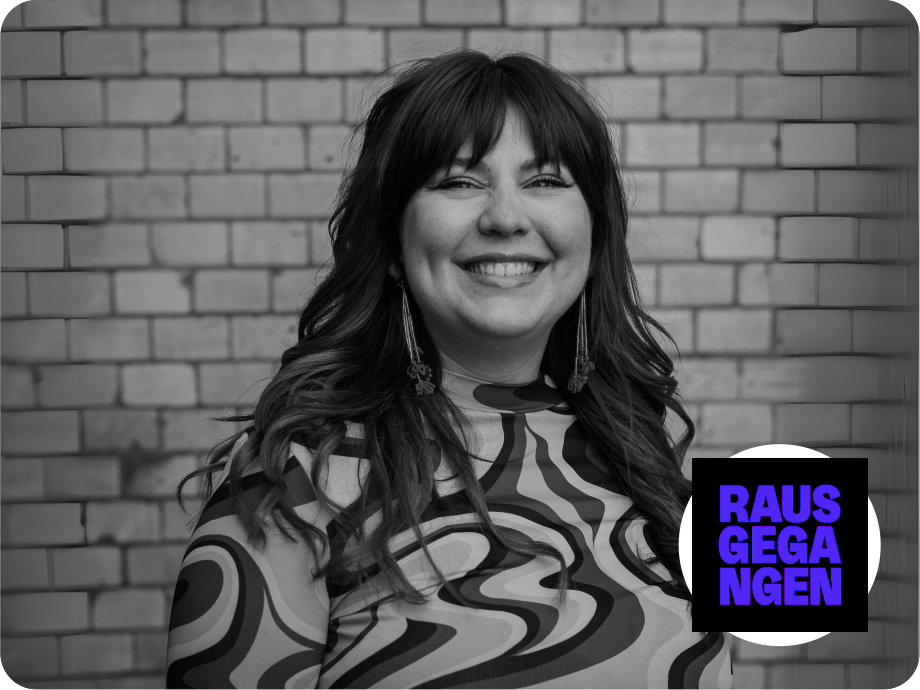
Lea Bohlmann
Head of Brand
What role do leaders play in creating a culture of openness around mental health?
As a leader, you shape not just workflows but the overall atmosphere of the team. At Rausgegangen, we strongly believe that mental health shouldn’t be a taboo, it’s a core part of our work culture. When leaders speak openly about their own challenges, it creates space for honest conversations, trust, and true connection in the team. It’s not about being perfect, it’s about being present. Listening, encouraging, and communicating transparently is the foundation of an open culture.
How has OpenUp helped you support your team’s mental health as a manager?
OpenUp has given us practical tools to not only respond to challenges but to proactively support our team. Whether it’s 1:1 coaching, daily well-being tips, or live sessions on resilience and mindfulness, it brings fresh energy and new perspectives. Personally, OpenUp was a great reminder that I don’t have to solve everything on my own. I can create the space, and then direct my team to the right experts.
“OpenUp has helped me as a manager not just to react, but to actively support my team.”
– Lea Bohlmann (Head of Brand)
What advice would you give other companies that want to prioritise mental health?
Stop treating mental health as a “private matter.” It’s part of working life, whether you acknowledge it or not. The key is not to place the burden solely on individuals (“just go get coaching”) but to create structures that provide real support. Flexibility, open communication, and space for real breaks aren’t “nice to haves,” they’re essential for sustainable work. And: lead by example. When leaders are open about their own challenges, it changes everything. It creates space, inspires courage, and shows you don’t have to pretend here.
Our advice: start small, but start. Whether it’s regular check-ins, partnering with external platforms like OpenUp, or simply asking “How are you really doing?”, every step counts. And each one shows: we take this seriously.
What do you hope for in the future? For your team, your industry, and mental well-being in general?
For our team, we hope mental health won’t be treated as an “extra,” but will become a natural part of everyday work. That taking breaks is valued just as much as performance. That we create spaces where vulnerability is welcome. Especially in industries like ours, where things move fast and loud, we need moments of pause, reflection, and genuine connection.
For the music and culture scene, we want more awareness of structural inequalities and real change. Women, FLINTA*, BIPoC, and queer individuals often carry double the burden: their experiences are often invisible, yet they’re expected to keep performing. We need safer spaces, feminist networks, and more decision-makers who make mental health a shared responsibility, not just an individual concern.
If we could wish for one thing, it would be this: to lead by example. To talk openly about mental health, to share mistakes, and to learn from each other. Because change doesn’t start “out there”, it starts right here. With us. And with what we’re willing to make visible.


