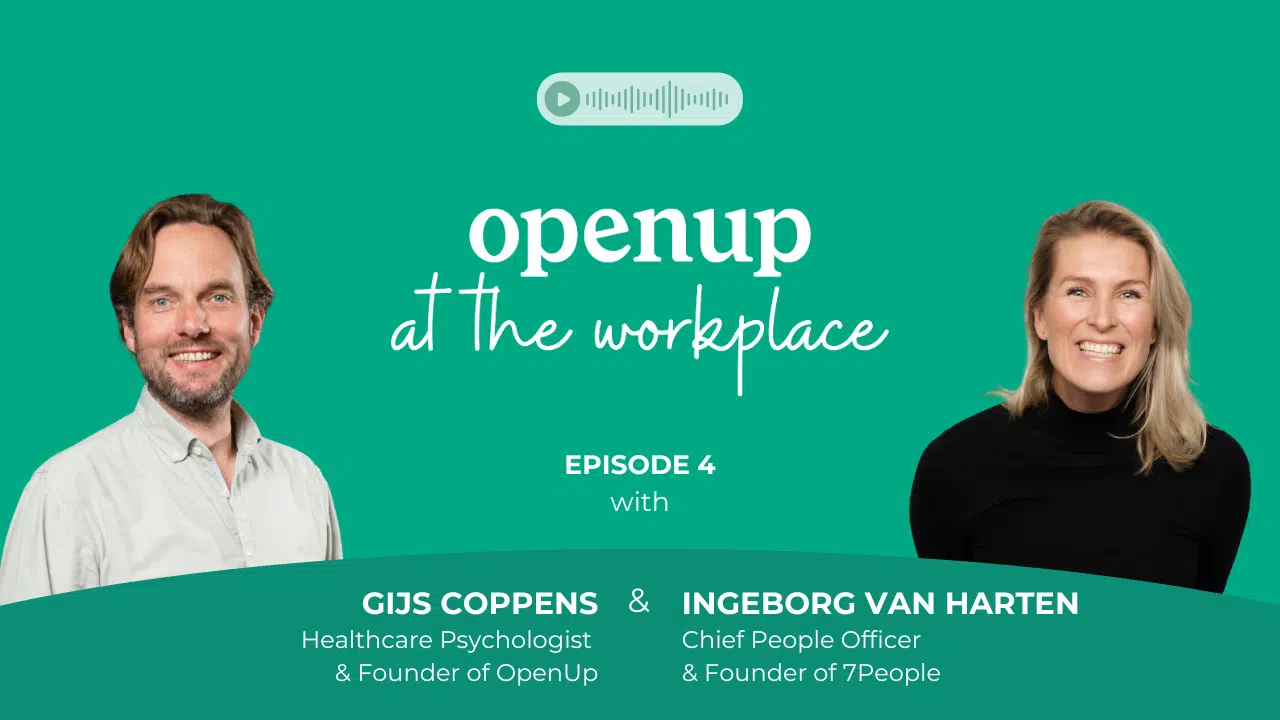
Episode #3 with Anna Brandt, Co-founder of Invested and Global Talent Leader
In the latest episode of “OpenUp at the workplace”, we had the pleasure of hosting Anna Brandt, co-founder of Invested and a global talent leader. Anna’s extensive experience in HR and her innovative approach to integrating technology in the workplace provided deep insights into the evolving landscape of HR tech.
In today’s fast-paced business landscape, the integration of technological innovation and maintaining human connection at the workplace presents both opportunities and challenges. In this episode, we delve into this dynamic balance with special guest Anna Brandt. Join Gijs Coppens, founder of OpenUp and healthcare psychologist, as they explore the evolving role of HR tech and its impact on workplace dynamics.
🎙️ Our HR podcast “OpenUp at the workplace” is available on Spotify,YouTube, and Apple Podcasts.
Key takeaways and practical insights
The Evolution of HR Tech
Anna discussed how HR technology has changed over the past two decades. From the early days of posting job listings on Monster Board to the revolutionary impact of LinkedIn, technology has significantly changed how companies attract and manage talent. Today, advanced tools support global talent acquisition and workforce planning, addressing challenges such as skill shortages and employee retention.
Impact of Technology on HR Processes
Anna highlighted the importance of HR tech in addressing skill shortages and improving productivity. By automating repetitive tasks, HR professionals can focus on more strategic activities that add value to the organisation. Technology has also enhanced the recruitment process, making it more efficient and enabling companies to reach a wider talent pool.
Balancing Tech Innovation and Human Connection
Despite the advancements in technology, Anna stressed the importance of maintaining meaningful human connections. While technology can enhance efficiency and support HR processes, it should not replace the human touch that is crucial in fostering a positive workplace culture. “The need to stay connected as humans will stay relevant even with advanced technology,” Anna stated. Leaders must guide employees through technological changes, providing context and reducing anxiety to ensure a smooth transition.
Options for staying connected via technology are increasing rapidly. They enable new types of workplaces, often hybrid or fully remote. The evolution of how and where we work is decreasing the immediate need for human interaction.
Cultivating a People-First, Tech-Positive Culture
The integration of AI into various aspects of our lives brings efficiency and convenience. Tasks that once required human intervention can now be automated, freeing up time and resources. However, this shift raises concerns about the potential erosion of human connections. The essence of human touch, empathy, and understanding can’t be replicated by technology alone. We all possess a desire for connection and belonging. Our ability to empathise, communicate, and form relationships distinguishes us from machines, and it’s through these connections that we find meaning and fulfilment in our lives.
As technology continues to advance and reshape the way we work and interact, the need for human connection has never been more crucial. We are navigating uncharted waters, and there are many challenges we need to conquer to fight the epidemic of people feeling disconnected. It’s essential to recognise the intrinsic value of human relationships and the role they play in shaping our personal and professional lives.
In this setting, as HR professionals, we must help our organisations prioritise initiatives that promote collaboration, communication, and mutual support among employees.
Ethical Governance in AI Implementation
The conversation also delved into the ethical implications of AI in HR. Anna and Gijs stressed the need for a strict moral compass and open dialogue within organisations. Anna said, “It’s important to have a moral compass as an organisation.” She further emphasised, “More than ever it’s important to have a very strict moral compass.
Because we’re going to make decisions in the unknown, let’s be honest about how we would implement technology in our product.” They suggested forming cross-functional committees to assess AI tools before implementation, ensuring that decisions are made responsibly and transparently. This approach can help mitigate risks and promote ethical use of AI in the workplace.
Adapting to AI at OpenUp
Gijs shared how OpenUp is integrating AI to enhance their services while maintaining the human touch. “Some dimensions of human contact can’t be replaced by technology,” Gijs explained. He added, “I think the view that we are competing with technology could be true. Technology is indeed very good in some tasks, but in others, we know it will be a human being. That’s maybe a bold statement, but I think some dimensions of human contact will not be replaced by technology.”
OpenUp can improve efficiency without compromising the quality of human interactions. This balance ensures that technology enhances rather than replaces the essential human elements of their service.
Looking to the Future
As we look to the future, the balance between technological innovation and human connection will continue to be a critical focus for HR leaders. Anna expressed optimism about the potential of AI and other advanced technologies to enhance workplace productivity and employee well-being. However, she also warned that maintaining ethical standards and prioritising meaningful human interactions will be essential in navigating this new landscape.
In conclusion, the insights from Anna Brandt remind us that while technology plays a key role in shaping the future of work, the human element remains irreplaceable. By striking the right balance, organisations can harness the power of technology while fostering a supportive and connected workplace environment.
About our HR podcast guest: Anna Brandt
Anna Brandt is a seasoned HR leader and co-founder of Invested, a company focused on innovative digital solutions for the workplace. With a background in global recruitment and HR strategy, Anna has worked with major tech companies such as Uber, N26, and TomTom.
Her work at Invested highlights her commitment to leveraging technology to enhance HR processes while maintaining a strong focus on human connection. Anna is passionate about creating inclusive workplace cultures and ensuring that technological advancements do not compromise the human elements essential to organisational success.
OpenUp at the workplace: Episode #3 timestamp guide
- 00:00 – 05:30 Introduction by host Vanessa Lamsvelt
- 05:31 – 13:10 How tech changes the landscape of HR and talent management
- 13:11 – 26:13 Impact of AI on workforce dynamics
- 26:14 – 44:29 How to prioritise human needs and experiences when implementing AI
- 44:30 – 50:32 Looking into the future, challenges and opportunities
OpenUp at the workplace: tune into all conversations
We hope you enjoyed our HR podcast episode “OpenUp at the workplace”. We would love to hear your feedback. And however you like to follow our conversations, we invite you to watch or listen to our episodes on your favourite streaming platforms.
👉Spotify: Link
👉YouTube: Link
👉Apple Podcasts: Link