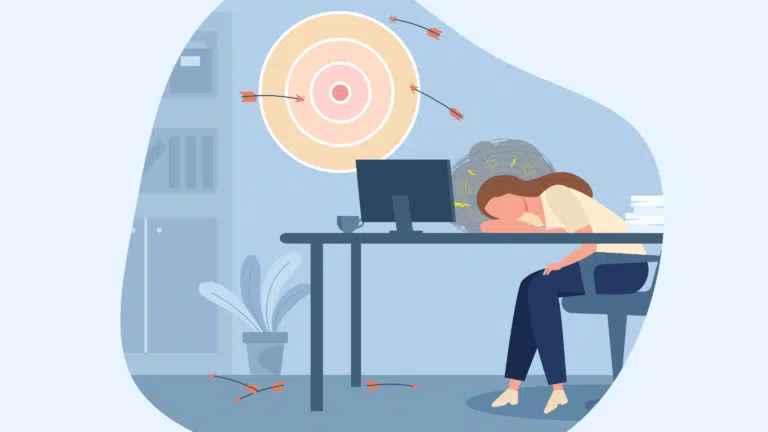

With 2026 being around the corner, New year’s resolutions are a hot topic. Why are we so eager to set ourselves a goal at the end of December? And how do you make sure you stick to your New Year’s resolutions for the rest of the year? Jan Helder, psychologist at Open Up, discusses setting goals and maintaining them.
‘One could say that setting a goal is a form of self-care. They might be just as necessary as sleep, good food and pleasant social contacts: you need them to feel comfortable. A goal gives you a sense of progression and development, precisely what makes people feel good.
Nobody likes to spend day after day without accomplishing anything. But when we feel like we’re making progress, this brings us positive energy. Do you have ambitions for 2026? Or perhaps for today? Then it’s good to know that although different rules apply to mental goals than to organisation’s economic goals, the basic principle stays the same. You can achieve a big ambitious goal by dividing it up into small, short-term goals. Think about where you could start tomorrow and get started. Do you feel that you are failing? Your small short-term goal is probably not small enough yet. Try to cut it down to an even smaller step.’
You can learn how to fail
‘You can’t achieve your big ambitious goal without setbacks along the way. That’s why it’s very important to not let it bring you down the moment something doesn’t succeed right away. Try to imagine that a dip doesn’t mean that you have failed. You may allow yourself to fail; see it as an inevitable part of your way forward. This way failing gets a neutral connotation instead of a negative one. Just as important: realise it is about your pace only. We live in a performance-driven society that imposes a time pressure that isn’t only murderous, but also probably doesn’t fit in with your own way of doing things. Therefore, learn to slow down. Decide for yourself what can be done now, what can be done later and what isn’t possible at all because you simply cannot influence it. With your own pace and kindness to yourself and failure, you can achieve so much more – including the goal you had in mind.’
Setting goals in 5 steps
1) Start Small and Concrete
Break your goal into small, manageable sub-goals. This helps you stay focused, track your progress more easily, and feel a sense of accomplishment along the way.
2) Formulate the Obstacles
Identify what’s standing in your way. Are there issues you can resolve within the next hour? Which challenges require outside help? Naming your obstacles makes them less overwhelming and more actionable.
3) Visualise Where You Want to Go
Picture your future self after achieving your goal. How do you feel? What has changed? Let this mental image fuel your motivation, especially during moments of doubt or setback.
4) Reflect on Your Progress
Even if your goal isn’t easily measurable, take time to reflect. Where are you now? What have you already achieved, and what’s still ahead? Honest reflection brings clarity and direction.
5) Share Your Goal with Others
Talk about your goal with friends, family, or colleagues. Their support can make the journey feel less isolating—and you might even find it easier to ask for help. Often, others are more willing to help you succeed than you might think.
Do you feel there is something else that helps you to reduce stress? Or do you feel that the above tips don’t help you? Reach out to our psychologists via team@openup.care or book a consultation via the following link. Our psychologists are there to help.__