
Do you often feel like you can’t switch off, even when trying to relax? You’re not alone. Many people unknowingly become hooked on the internal high of stress hormones, particularly cortisol. While not officially recognised as a clinical diagnosis, cortisol and stress addiction is a real and growing concern, especially in high-pressure environments and situations.
Understanding the pattern behind cortisol addiction can help you break free from it. In this article, OpenUp psychologist Judith Klenter explores what cortisol addiction means, how it develops, and what you can do to start reducing stress and feeling better.
What Is Cortisol Addiction – And is it Real?
Cortisol addiction is not an official medical diagnosis, but it is a clinically observed pattern in which individuals become psychologically and physiologically dependent on the internal stimulation triggered by cortisol, the body’s primary stress hormone.
When you’re exposed to repeated stressful situations, your adrenal glands produce cortisol to help you respond, heightening alertness, sharpening focus, and preparing the body for action. This is part of the well-known fight, flight or freeze response.
The “fight, flight, or freeze” response is your body’s natural way of reacting to perceived danger or stress. It’s a survival mechanism that prepares you to either confront the threat (fight), escape it (flight), or become immobile (freeze).
But here’s where it gets tricky: stress-related behaviours can become compulsive.
Over time, the repeated release of cortisol may create a kind of feedback loop, reinforcing the very behaviours that produce it. In fact, research is now exploring the connection between cortisol and dopamine, the brain chemical associated with reward and habit formation.
Although a healthy amount of dopamine contributes to a good mood and cognitive functions, irregular levels can create an unhealthy drive to seek more pleasure.
This results in a cycle of reward-seeking to get a hit of feel-good chemicals. Over time, the substances or behaviour alter brain chemistry, resulting in desensitisation —needing more of the substance or behaviour to feel the same effect, as Dr Anna Lembke notes in her book Dopamine Nation. So, is cortisol addiction real? While the term isn’t formally used in diagnostic manuals, its symptoms and consequences are very real. And for people who are constantly anxious or wired, recognising the signs of this pattern is the first step to alleviating it.
How Cortisol Hijacks the Brain and Body
Cortisol plays a huge role in how we react when things feel overwhelming. When you’re under pressure, your brain sends a signal to your body through something called the HPA axis (short for the hypothalamic-pituitary-adrenal axis). This system tells your adrenal glands to release cortisol, helping you gear up for action.
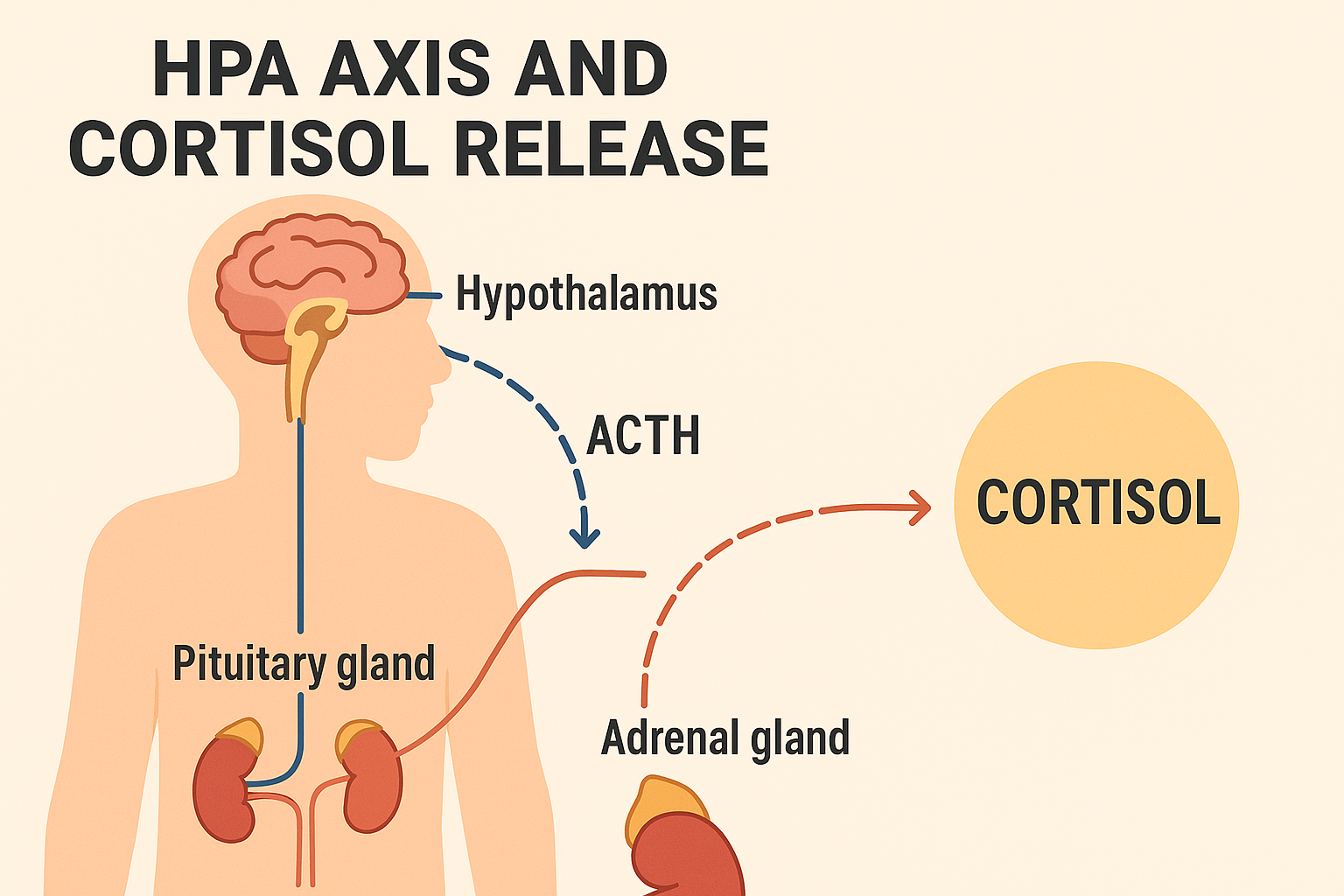
This is part of the classic fight, flight or freeze response that we previously discussed: your heart races, your muscles tense, and your senses become sharper. In small bursts, this is useful. It helps you stay focused in a meeting or react quickly in a crisis. But here’s the problem: when stress becomes a constant part of your day, your body keeps pumping out stress hormones, even when there’s no real danger. Over time, this can take a serious toll on your mental well-being, energy, and ability to relax.
According to the Mayo Clinic, ongoing stress is linked to anxiety, sleep problems, heart issues, weight gain, and memory problems. The American Psychological Association (APA) also notes that chronic stress changes the way your brain works, making it harder to stay calm, focus, or bounce back after setbacks. You might even start to crave that wired, high-alert feeling without realising it. As we explored in our previous section, cortisol and dopamine can work together to keep you hooked on the cycle, even though it’s exhausting.
So, does cortisol cause anxiety? Not directly, but being stuck in stress mode can add fuel to the fire.
Signs You Might be Addicted to Cortisol
Just like any behavioural pattern, cortisol addiction symptoms can vary from person to person, but there are common warning signs to look out for. People who are unknowingly hooked on the body’s stress hormone often struggle to slow down, even when rest is needed.
Here are some signs that may indicate a cortisol addiction:
-
Craving busyness: You may feel the urge to stay busy all the time, filling every gap in your schedule with activity. Stillness or quietness can feel uncomfortable, or even threatening — a sign that your nervous system is dysregulated by chronic stress. Many workplace cultures, especially those that prize high performance and hustle, can reinforce this state, making rest feel unsafe or unacceptable.
-
Feeling guilty when resting: If taking a break triggers guilt, anxiety, or shame, it could point to an unhealthy relationship with productivity. This constant pressure to “do more” may be your body unconsciously chasing the cortisol spike that comes with stress. Some organisational environments may compound this by subtly (or overtly) rewarding overwork and discouraging boundaries, making it harder to recognise rest as a right rather than a weakness.
-
Seeking out stress: People with a stress addiction often self-sabotage by subconsciously placing themselves in stressful situations: overcommitting, leaving things to the last minute, or taking on unnecessary pressure.
-
Trouble sleeping, irritability and fatigue: Chronically elevated cortisol levels can interfere with sleep cycles and emotional regulation. If you’re tired but wired, easily agitated, or running on an empty battery but can’t switch off, these may be physical signs of cortisol overload.
Difficulty slowing down: Even when you have the opportunity to rest, you might feel anxious, restless, or unmotivated. Your body may be so used to high alert that relaxation feels unnatural.
If you’re wondering, “Am I addicted to cortisol?”, try asking yourself the following:
- Do I feel uneasy when life feels “too calm”?
- Do I keep saying yes even when I’m already overwhelmed?
- Does resting make me feel lazy, guilty or restless?
- Do I thrive in chaos, even if it’s exhausting me?
👉 To start unwinding this cycle, try these stress recovery tips.
*An important note: Some of the above signs may be linked to Attention Deficit Hyperactivity Disorder (ADHD). For more information on what to look out for, read our neurodiversity article.
Cortisol Addiction Treatment: How to Break the Cycle
If you’ve been living in high-alert mode for a while, slowing down might not feel natural. The key to recovery is gently showing your nervous system that it’s safe to rest. Here are small steps you can take to start breaking the cycle:
- Start by giving yourself permission to rest: Remind yourself that you don’t have to earn your rest by completing a to-do list. While it might be tempting to keep going, try to give yourself even five minutes of stillness to relax in between tasks. This can interrupt the cortisol loop and reset your baseline.
- Focus on calming your nervous system: Practices like breathing exercises, gentle stretching, or even a walk in nature can help reduce cortisol levels. You don’t need a full meditation routine — just small moments of calm throughout your day.
- Protect your energy with clear boundaries: When you’re addicted to being “on,” saying no can feel threatening. But creating breathing room, even by declining one meeting or task, is a powerful way to retrain your stress response.
- Reduce your screen time: Phones, emails and constant notifications can keep your stress response on high alert. Even a short digital detox, like switching off devices an hour before bed, can lower cortisol production and help your mind unwind.
- Support your sleep (even if it’s hard): Chronic stress often disrupts sleep, and poor sleep keeps cortisol high. To help get a restful night’s sleep, try building a consistent wind-down routine — dim lights, no screens, calming music — to gently cue your body to slow down.
- Nourish your body: When stress is high, it’s common to skip meals, over-caffeinate, or crave sugar. Instead of aiming for perfect nutrition, try adding small, steady meals and water breaks to keep your energy and cortisol stable. This will help you towards living a healthier lifestyle.
Try CBT or DBT techniques: Cognitive-behavioural therapy (CBT) and dialectical behaviour therapy (DBT) can help you recognise and rewire thought patterns that fuel stress. These evidence-based approaches are powerful tools for breaking automatic cortisol-driven responses. Many of our expert team are trained in CBT and DBT therapies.
Your Cortisol Reset Plan: Small Changes, Big Impact
Recovering from cortisol addiction isn’t about overhauling your entire life overnight, it’s about small, consistent shifts that rebuild safety and balance in your body. Tiny steps can lead to major healing over time.
- Get natural morning light: Sunlight first thing in the morning helps regulate your cortisol rhythm, lifting your energy naturally and setting you up for better sleep at night. A few minutes outside, even on cloudy days, can make a real difference.
- Cut back on caffeine and sugar (gently): Stimulants like coffee and sugar spike stress hormones and can keep you stuck in a wired state. If quitting feels overwhelming, start by swapping one cup of coffee for herbal tea, or swap one sugary snack for a healthier option and build the habit gradually.
- Prioritise rest without guilt: Rest isn’t a reward you have to earn; it’s a basic need. Reframing your mindset around rest, seeing it as essential rather than indulgent, is key to cortisol addiction treatment and lasting recovery.
- Lean on support systems: You don’t have to reset alone. Therapy, coaching, or peer support groups can help you navigate the emotional patterns that feed stress addiction and rebuild healthier coping strategies.
Take Back Control from Cortisol: You’re Not Alone
Understanding the meaning of cortisol addiction is the first step toward change. When you’re constantly addicted to stress, it’s easy to believe that being wired, busy, or overwhelmed is just “how life is.” But it doesn’t have to be that way.
Remember, cortisol addiction is not your fault. It’s a natural response to living in a world that often rewards overwork and constant stimulation. Recognising the signs, understanding the science, and taking small, consistent steps toward recovery are powerful acts of self-care.
It’s also important to remember: struggling with stress or needing help to reset your nervous system is completely normal. Many people need support to break free from chronic stress patterns, and reaching out is a sign of strength, not weakness.
Ready to work on reducing your stress? OpenUp’s experts are here to help. Book a 1:1 online session today.