
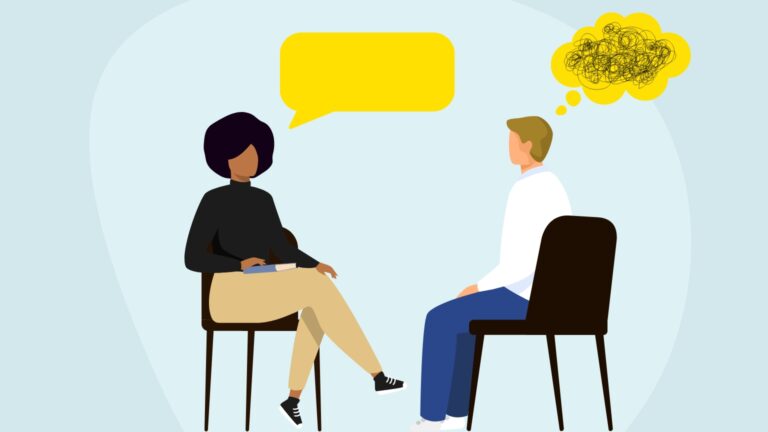
A mental health coach is a non-clinical professional who helps you strengthen your well-being and personal growth through structured, goal-focused support.
Unlike therapists, coaches do not diagnose or treat mental illness. Instead, they guide you in building resilience, developing healthier habits, and navigating everyday challenges.
Throughout this article, you’ll also hear from Britt, a certified psychologist and mental health coach at OpenUp, who shares insights from her daily work with clients.
Britt often tells clients:
“Resilience isn’t a fixed trait, it’s a muscle you can train, just like fitness.”
This is the essence of coaching: equipping you with tools to handle today’s challenges and prepare for those still to come.
Who Is Mental Health Coaching For?
Mental health coaching is for you if you want to feel more balanced, confident, and resilient. It can be especially helpful when you:
-
Want to reduce stress and prevent burnout.
-
Struggle to set boundaries between your work and personal life.
-
Are facing a big life transition such as relocation, parenthood, or a promotion.
-
Want to improve your relationships or communication skills.
-
Feel stuck and need support to move forward.
You might also find coaching useful in your professional life. You can use it to manage workload, sharpen your focus, or navigate challenges with your team.
If you’re in a leadership role, coaching can help you handle difficult conversations, make decisions with more clarity, and prevent burnout, for yourself and your team.
As Britt has noticed in her practice:
“Many clients don’t come to me for radical change. They just want to feel steadier day-to-day, whether that’s managing workload, navigating relationships, or moving through transitions with more ease.”
What Can Coaching Help You With?
Coaching gives you a practical toolkit for everyday life. Think of your coach as a sparring partner who helps you turn reflection into action. Together, you’ll translate your intentions into small, achievable steps.
Here are some of the ways coaching can support you:
-
Managing stress: learning techniques to stay calm on busy days.
-
Regulating emotions: handling tough conversations with more confidence.
-
Creating healthier habits: building routines that actually stick.
-
Building resilience: equipping yourself to bounce back from setbacks.
-
Staying accountable: keeping on track through regular check-ins.
-
Navigating change: moving through transitions like new roles, relocations, or parenthood.
-
Improving workplace challenges: balancing workload, boosting confidence, or collaborating more effectively.
Britt shares an insight from her sessions:
“It’s often about small behavioural changes that add up, like taking regular short breaks or creating a routine for reflection. The key is finding something that suits you.”
She recalls one client who struggled with perfectionism:
“She often thought, ‘It’s never good enough.’ Through a CBT tool of reframing, she practised replacing this with, ‘Good enough is still progress.’ Her self-pressure eased, and she felt lighter.”
Mental Health Coach vs. Therapist: What’s the Difference?
It’s easy to confuse mental health coaching with therapy, but the two serve different purposes.
Therapy is about healing. You work with a therapist to process trauma, explore deep-rooted struggles, and manage diagnosed conditions. Coaching, on the other hand, is about growth. With a coach, you build skills, set goals, and move forward with confidence.
As Britt explains it:
“Coaching is like training for future challenges, while therapy is about healing past wounds.”
You might find that coaching and therapy are helpful at different points in your life. Sometimes, you may even benefit from both at the same time. For example, you could be seeing a therapist to process your past while working with a coach to boost your confidence at work.
The key question to ask yourself is:
Do I want to build skills for the future, or do I want to process and heal from the past?
If you’re unsure, starting with a coaching session can help you figure out what you need most right now.
What Techniques Does a Mental Health Coach Use?
They use practical, evidence-based techniques that you can apply directly to your daily life. These are not abstract theories but tools you can put into practice straight away.
Some of the most common techniques include:
-
Mindfulness: staying present and grounded in stressful moments.
-
Cognitive Behavioural Therapy (CBT)–inspired tools: reframing unhelpful thought patterns.
-
Acceptance and Commitment Therapy (ACT) strategies: focusing on what truly matters to you and learning to stay flexible.
-
Journaling: reflecting on your thoughts and feelings to increase self-awareness.
Britt explains how she uses these methods:
“In coaching, I often draw on CBT-inspired tools, like reframing thoughts before a big presentation. It’s about giving you something you can use right away.”
The goal is always the same: to help you build resilience, develop self-awareness, and feel more capable in handling life’s ups and downs.
Why Is Mental Health Coaching Important Today?
Life feels faster and more demanding than ever. You might be juggling work, family, and personal responsibilities, all while trying to stay balanced.
Research shows that 44% of people report feeling frequent stress at work, which means nearly half of us are struggling.
When stress builds up, it doesn’t just affect your mood. It can eat away at your sleep, relationships, and confidence.
That’s where coaching makes a difference. You don’t need to wait until you’re burned out or in crisis, it’s a preventative support system that helps you feel steadier now.
With a coach, you learn skills you can apply immediately: whether that’s finding calm before a big meeting, creating healthier work-life boundaries, or feeling less overwhelmed by daily tasks.
As Britt puts it:
“You don’t need to wait until you’re in crisis to benefit from coaching. It’s about learning skills now, so you’re stronger for whatever comes next.”
For companies, the benefits are clear too.
For example, OpenUp’s Impact Report and research from Deloitte shows the benefits that investing in mental health can have:
-
83% of people felt their well-being improved.
-
74% reported higher productivity.
-
70% said their retention in their role improved.
-
For every £1 spent on supporting the mental health and well-being of their workforce, employers get (on average) about £4.70 back in increased productivity.

When employees feel supported, they perform better and stay longer. But on an individual level, coaching gives you the everyday tools you need to navigate challenges with more resilience and confidence.
As Britt explains:
“When employees feel supported, the whole atmosphere shifts. Productivity improves, but so does the team culture.”
How Do You Get Started With Coaching?
Starting coaching might feel like a big step, but it’s simpler than you think. Here’s what the process usually looks like:
-
Book a session: often online, at a time that works for you.
-
Get matched with a coach: usually based on your goals or preferences.
-
Attend your first session: you’ll talk through what brought you here and set realistic goals.
-
Continue your journey: with regular sessions that build your skills and track your progress.
Your first session is about getting comfortable and exploring what matters to you.
You don’t need to have everything figured out beforehand, just showing up is already a powerful step.
As Britt explains:
“I always tell people: it’s less about saying the right thing, and more about starting the conversation. From there, we can build together.”
Additionally, Britt advises the following:
“When choosing a coach, the relationship is key. If you don’t feel you can trust your coach, it’s okay to try someone else. Coaching works best when you feel safe.”
You’ll likely leave that first session with a clearer sense of direction and at least one practical strategy you can use straight away.
How Much Does a Mental Health Coach Cost?
If you’re paying privately, you can expect coaching sessions to range between £50 to £250 per session depending on location, the coach’s background, and whether you’re booking a single session or a package.
Some coaches offer prepaid bundles or multi-session cards that reduce the cost per session and give you consistency. This is when coaching really starts to become impactful.
If your employer partners with a provider like OpenUp, your sessions may be fully covered, making it easy to get started without worrying about personal costs.
Think of coaching as an investment in yourself. The money you put in goes toward building resilience, improving focus, and creating long-term balance in your life.
FAQs About Mental Health Coaching
What Is a Mental Health Coach?
A mental health coach is a non-clinical professional who helps you manage stress, build resilience, and reach personal or professional goals. They don’t diagnose or treat mental illness, but instead give you practical tools to feel better and move forward.
Who Is Mental Health Coaching For?
Coaching is for anyone who wants to feel more balanced, confident, and resilient. Whether you’re dealing with work stress, navigating a big life change, or just want to improve your everyday habits, coaching can support you.
Mental Health Coach vs. Therapist: What’s the Difference?
A therapist helps you process the past, work through trauma, and treat diagnosed mental health conditions. A coach focuses on the present and future, helping you set goals and take action. Many people benefit from using both at different times or at the same time.
What Techniques Does a Mental Health Coach Use?
They use evidence-based tools like CBT-inspired thought reframing, ACT techniques, mindfulness practices, and journaling. These aren’t abstract theories, they’re practical strategies you can apply in daily life.
How Soon Might You See Results From Coaching?
Many people notice small but meaningful changes after just a few sessions, like feeling calmer, more focused, or more confident. Long-term improvements, such as stronger resilience and new habits, build with consistency.
How Quickly Can You Access a Coach?
You can usually book a session within 48 hours. Compared with therapy waitlists, this makes coaching a highly accessible option when you need support quickly.