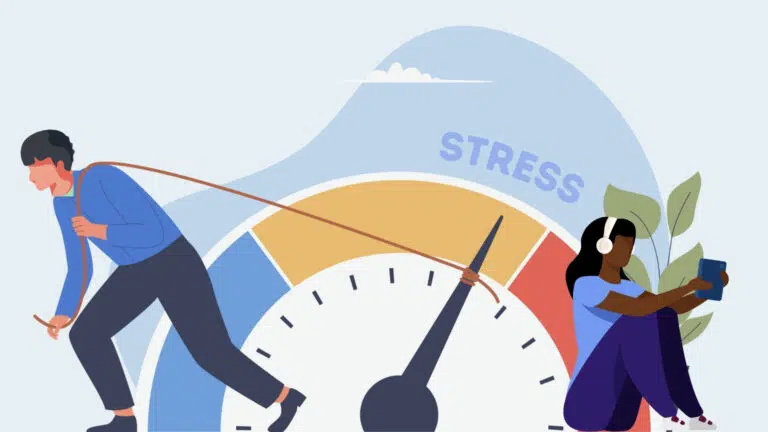

Burnout doesn’t usually show up all at once, it builds slowly, often disguised as “just being tired” or “pushing through.” But over time, chronic stress can take a serious toll on your mental, emotional, and even physical health.
This guide is here to help you change direction before you hit that wall or find your way back if you’ve been there before. With practical, proactive tips grounded in psychology, it’s designed to help you build long-term habits that protect your energy and well-being.
You’ll also hear insights from Britt Slief, a psychologist at OpenUp who specialises in burnout prevention. Her experience guiding people through burnouts brings warmth, clarity, and real-world perspective to the strategies that follow.
Let’s explore what burnout actually is, why it sneaks up on us, and how small daily shifts can make a big difference in avoiding burnout for good.
You’re Not the Only One Feeling This Way
Right now, nearly half of the global workforce is experiencing burnout symptoms, (according to research), and yet, many people still feel alone in it. If you’ve been running on empty or wondering why you can’t “just bounce back,” you’re not alone. And there’s nothing wrong with you.
“As a psychologist, I often meet people who feel isolated in their exhaustion, like everyone else is managing just fine,” shares Britt. “But once we name what’s really going on, there’s often a sense of relief. Recognising burnout for what it is, and knowing you’re not alone, is the first step toward feeling better.”
Burnout is a state of emotional and mental exhaustion caused by prolonged stress, often from trying to meet constant demands without enough recovery. It doesn’t happen overnight; it creeps in gradually, making it harder to spot until you’re deep in it.
That’s why this guide focuses on how to avoid burnout by catching early signs, protecting your energy, and creating habits that reduce stress before it becomes chronic. You deserve to feel steady and supported, not just surviving, but thriving.
How to Avoid a Burnout: A Reflective Guide to Feeling Better
Wondering how to prevent a burnout when you’re already feeling stretched thin? Let’s pause for a moment together.
This guide offers a gentle self-check-in approach to overcome burnout – think of it as having a quiet cup of tea with yourself.
The questions you’ll explore aren’t meant to diagnose you but to help you notice patterns in your daily life that might be affecting your mental health and well-being.
By reflecting on your current habits, feelings, and environment, you’ll develop the awareness needed to prevent burnout before it takes hold or to slowly begin your recovery process.
Many people experiencing burnout wish they’d recognised the signals sooner. This reflective process will help you do exactly that.
Self-check-in summary:
- Are you paying attention to your early warning signs?
- Are you protecting your time with clear boundaries?
- Are you getting real rest – not just sleep?
- Does your routine support you – or drain you?
- Are you reaching out when you feel overwhelmed?
- Are you still doing the things that give you purpose?
- Are you moving your body to clear stress?
- Are you organising your time with realistic expectations?
- Are you re-evaluating what actually deserves your energy?
- Are you taking breaks that actually feel like breaks?
Are you paying attention to your early warning signs? ⚠️
Your body and mind whisper before they scream. Learning how to avoid burnout starts with listening to these whispers.
Do you recognise any of these warning signs of burnout in yourself?
- Trouble falling or staying asleep
- Tension headaches or unexplained muscle pain
- Feeling irritable over small things
- Forgetting appointments or deadlines
- Emotional and mental exhaustion by mid-week
When you feel overwhelmed, these physical symptoms often appear first. Try a quick daily check-in: “How’s my body feeling today?” This simple habit helps prevent burnout by catching patterns early.
Are you protecting your time with clear boundaries? ⛔
A crucial strategy for how to avoid burnout is learning to protect your time. Think of boundaries as loving guardrails, not walls.
“Boundaries aren’t selfish, they’re essential self-care,” explains Britt. “They protect your energy for what truly matters.”
What might healthy boundaries look like?
- Turning off work notifications outside working hours
- Saying “I need to check my calendar” before committing
- Having tech-free zones or times in your home
- Politely declining non-urgent requests when you’re stretched thin
Don’t feel guilty for setting boundaries between your job and personal life. They’re your invisible shield against overwhelm.
Are you getting real rest? Not just sleep. 💤
Learning how to avoid burnout isn’t just about getting your eight hours. Your mind needs true restoration too.
“Rest is not a reward, it’s a need. We often underestimate the power of non-doing. Even five screen-free minutes can restore more than we think,” Britt shares.
When you feel overwhelmed, try these mental restoration activities:
- Five minutes of deep breathing between meetings
- A hobby that fully absorbs your attention
- Screen-free evenings once a week
- Time in nature without your phone
These practices are crucial for how to stop burnout before it takes hold.
Does your routine support you or drain you? ⚡
Your daily habits are either helping you avoid burnout or quietly making it worse. Let’s take a closer look.
Think about your typical day. Which activities give energy back and which take it away?
Some ideas for you to try:
- Starting your day with five minutes of quiet instead of emails
- Taking a proper lunch break away from your desk
- Walking midday when your energy naturally dips
- Ending work with a “complete” list, not just a “to-do” list
Are you reaching out when you feel overwhelmed? 👥
A powerful strategy for how to avoid burnout is surprisingly simple: asking for help.
“Many people see seeking support as weakness, when it’s actually a sign of self-awareness and strength,” says Britt. “It’s one of the most effective tools for avoiding burnout.”
Your emotional support options might include:
- Weekly check-ins with a trusted friend
- Meaningful conversations with family or friends
- Professional support through services like OpenUp or iPractice
- Joining communities focused on mental health and well-being
Are you still doing the things that give you purpose? ✨
When we’re drowning in chronic stress, meaningful activities are often the first thing we drop, yet they’re crucial to help us cope.
Purpose and values create a powerful buffer against emotional and mental exhaustion. It reminds you that your life is bigger than your current challenges.
Reconnect with activities that light you up:
- Creative outlets that let you express without pressure
- Community involvement that extends beyond yourself
- Quality moments with loved ones
- Learning something purely because it interests you
- Treating yourself to a “you” day
Are you moving your body to clear stress? 💃
Your body holds stress physically and movement helps release it. This is a key part of how to avoid burnout that many overlook.
When you feel overwhelmed, your body often shows physical symptoms first. Movement helps your body recover from stress and restores balance to your physical and mental health.
Try these tips:
- A 10-minute morning stretch routine
- Dance breaks between work tasks (no skill needed!)
- Walking meetings instead of sitting ones
- Gentle yoga before bed to release tension
“A client started taking dance breaks between meetings. Not for exercise, just to shake it out. She said it helped more than coffee ever did,” shares Britt.
Are you organising your time with realistic expectations? ⏱️
Endless to-do lists are common burnout symptoms. Learning how to avoid burnout means getting honest about what’s actually possible in your day.
“Most of us consistently overestimate what we can accomplish,” explains Britt. “This creates a cycle of feeling like you’re always falling behind.”
Try these practical time management shifts:
- Identify just 1-3 true priorities each day
- Schedule buffer time between tasks
- Set clear boundaries around working hours
- Build in transition time between work and personal activities
Are you re-evaluating what actually deserves your energy? 🔋
Emotional exhaustion often comes from giving energy to things that don’t truly matter as much in the long run. Learning how to avoid burnout requires asking: “Does this deserve my limited energy?”
“Energy is not unlimited. Spend it like something precious. Saying no to the wrong things opens space for the right ones,” says Britt.
Try this:
- Write down three things you could let go of this week
- Release the pressure to please everyone
- Prioritise what’s meaningful over what’s expected
Are you taking breaks that actually feel like breaks? 💆♂️
Not all downtime is created equal when learning how to avoid burnout. Scrolling social media might feel easy but rarely reduces stress.
True restorative breaks reset both your physical and mental health:
- A 10-minute walk with deep breathing
- Five minutes of stretching
- A quick chat with someone who makes you smile
“How to stop burnout starts with recognising that work-life balance requires intentional rest,” explains Britt. “These micro-recoveries can be more effective than a holiday taken too late.”
💡 Take a moment to acknowledge the areas where you’re already doing well, that matters. Then, choose one or two other areas to gently focus on this week. You don’t have to do it all at once. And if it ever feels too heavy, remember: you can always reach out to OpenUp for support.
How to Prevent Burnout in the Workplace
Preventing burnout at work isn’t just an individual responsibility, it’s organisational too. Companies play a crucial role in creating environments where teams can thrive without burning out.
Psychological safety forms the foundation of burnout prevention. When people feel safe to speak up about workloads, they’re less likely to reach breaking point.
Watch for early warning signs:
- Increased sick days
- Missed deadlines
- Withdrawal or tension in teams
- Reduced performance
- Lack of team member engagement
Create a burnout-resistant culture by:
- Respecting working hours and boundaries
- Training managers for regular well-being check-ins
- Encouraging real breaks during the workday
- Reviewing workloads and adjusting as needed
- Offering stress management support early
“You don’t prevent burnout by adding mindfulness lunches on top of overloaded calendars. It starts with listening, adjusting, and making well-being part of the workflow, not an extra,” says Britt.
OpenUp helps organisations build resilient, supported teams with proactive coaching and workshops. For more clinical care, our partner iPractice is here to help. Offering a full spectrum of support.
Take Care of Yourself Before You’re Running on Empty
Learning how to prevent burnout means recognising that self-care isn’t selfish, it’s essential. The small daily practices we’ve explored can make a significant difference in overcoming burnout.
Proactive mental health support is always better than recovery. Just like physical health, it’s easier to maintain than repair.
“Burnout doesn’t ask for permission, it creeps in. But so can care, clarity, and boundaries. Prevention is powerful, especially when it starts small,” says Britt.
At OpenUp, we believe preventing burnout starts with awareness and continues with consistent, compassionate action. Our coaches specialise in helping you navigate chronic stress before it becomes overwhelming.
Need more comprehensive support? iPractice offers clinical care when burnout prevention needs extra attention.
Get OpenUp for your team
FAQs about Burnout Prevention & Avoidance
What does “burnout prevention” actually mean?
Burnout prevention means taking steps to protect your mental, emotional, and physical energy before you reach a state of exhaustion. It’s about noticing the warning signs early and putting systems in place to manage stress, like setting boundaries, taking breaks, and staying connected to what gives you energy. Prevention isn’t a one-time action, it’s a habit.
What are the most important things to do to stop burnout?
Start with the basics: sleep well, move regularly, and say no when you’re at capacity. Protecting your time and energy, getting regular rest, and staying connected to supportive people are key. If something feels like it’s slowly wearing you down, it probably is, pay attention early.
Can you avoid burnout if your job is really demanding?
Yes, but it takes intention. Even in high-pressure jobs, small daily shifts, like setting clearer boundaries, taking real breaks, or talking to someone when you feel overwhelmed, can make a big difference. Burnout isn’t always about workload alone, it’s about how well you recover from stress.
How do I know if I’m close to burning out?
If you constantly feel drained, irritable, or disconnected from your work or life, it’s worth checking in. Trouble sleeping, headaches, or losing interest in things you enjoy are also signs. Burnout doesn’t happen overnight, it builds slowly, so tuning in early matters.
What if I feel guilty taking time to rest?
This is so common, but rest isn’t a luxury, it’s part of staying well. Taking breaks, saying no, or choosing a quiet evening isn’t lazy, it’s smart. Think of it like charging your phone: you wouldn’t wait until it’s completely dead. Your energy works the same way.
How can I support a colleague or friend to overcome burnout?
Be a safe space. Instead of offering solutions right away, listen without judgment. Ask how they’re doing, really doing and let them know they’re not alone. You can gently suggest they take time off, set clearer limits, or speak with someone, like a coach or therapist.
Does OpenUp help with burnout recovery?
OpenUp focuses on preventing burnout before it reaches a critical stage. Our platform supports employees and individuals with coaching, tools, and education. If someone is already experiencing deep burnout symptoms, we help them get support through our clinical partner, iPractice.