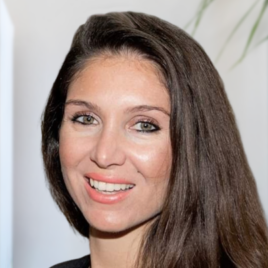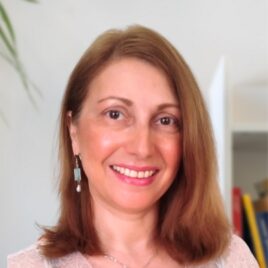
Panagiota Panagiotaki
Panagiota brings a rich scientific background and mindfulness expertise to her practice, focusing on emotional balance and practical solutions. She helps you navigate life’s challenges with greater confidence, offering effective ways to manage stress, anxiety, and set healthy boundaries. Drawing from her extensive experience with diverse communities, including LGBTQ+ individuals and those facing burnout or panic disorders, Panagiota creates a supportive environment for personal growth. Her Greek heritage and experiences living across Europe, Asia, and the Middle East have shaped her appreciation for how cultural perspectives influence our mental well-being journeys. As a certified meditation teacher, she blends evidence-based methods with deep empathy, creating a space where you can explore your challenges, discover inner strengths, and work toward meaningful goals—whether that’s career advancement, building healthier relationships, or finding balance in a busy world.
About Panagiota
Educational background
- DEA (MSc) Cognitive Studies – Paris XI University (currently Paris-Saclay)
- BSc. Psychology – Aristotle University of Thessaloniki
- CEBTT (Cultivating Emotional Balance Teachers Training) – Santa Barbara Institute of Consciousness Studies
Preferred therapeutic approach
Working style
Panagiota combines scientific evidence with mindfulness practices to create a respectful and empathetic environment for your sessions. She takes time to understand your unique personality and life circumstances while working toward clear goals. Her approach is structured yet adaptable, always prioritizing what best serves your individual well-being and growth. You can expect regular skill-building exercises that reinforce your progress between meetings. Whether you’re facing career transitions, relationship challenges, or seeking personal empowerment, Panagiota provides educational insights about psychological concepts while encouraging you to take an active role in your well-being journey.
“Seeking help is not a weakness but a form of inner strength—and those who are already used to giving a hand often understand its true power when they decide to extend that same care to themselves.”