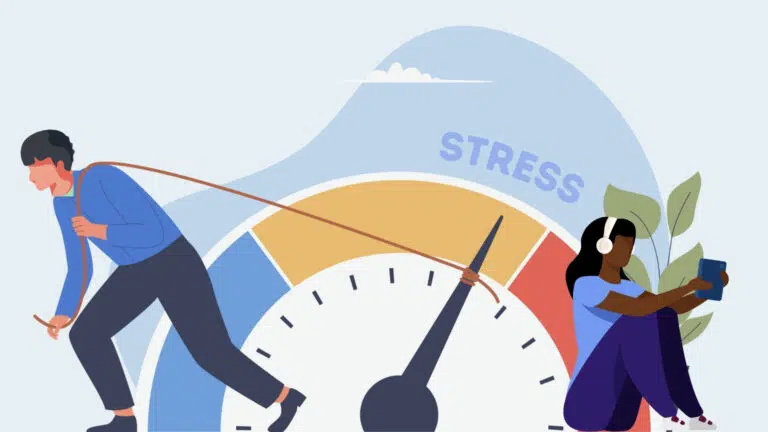
“I’m just stressed” – how many times have you said this when actually, you might be experiencing something deeper?
In today’s always-on work culture, burnout versus stress has become a crucial distinction that many of us miss.
We often use these terms interchangeably, but they’re fundamentally different experiences with different solutions.
Think of stress as a temporary state, like having too many tabs open on your computer. It’s overwhelming but fixable with a restart. Burnout, however, is when your internal battery has completely drained and won’t recharge.
Understanding the difference between stress and burnout isn’t just about semantics. It directly impacts your work-life balance, physical health, and how you recover when feeling overwhelmed.
For managers and HR professionals, recognising whether a team member is experiencing everyday stress or heading toward burnout determines what support they actually need.
In this article, you’ll explore:
- The clinical differences between burnout and stress
- Key warning signs to watch for in yourself and others
- When to manage stress yourself versus when to seek a mental health professional
- Practical recovery strategies for both condition
What is Stress?
Stress is a natural short-term response to challenges. It’s your body’s built-in alarm system, reacting to deadlines, pressure, or sudden change. This reaction is part of your body’s fight-or-flight response, which prepares you to either confront the challenge or escape it.
You might feel stress when:
- Deadlines loom larger than your available time
- You’re juggling too many responsibilities
- You have unclear expectations or poor communication at work
- You’re worried about job security or big changes
Physical and emotional signs of stress:
- Headaches, tense muscles, digestive issues
- Trouble sleeping or changes in appetite
- Irritability, restlessness, or feeling overwhelmed
**“A client once told me their heart would race just by opening her laptop in the morning. It wasn’t that she didn’t like her job, she was just caught in a cycle of constant deadlines and unrealistic expectations.”
**— Britt Slief, OpenUp Psychologist
Stress can be acute (short-term) or chronic (long-lasting). While short bursts can actually help you focus or meet a challenge, prolonged stress wears you down over time.
**“Stress isn’t always bad. It can help you stay focused or alert. But when it becomes your daily baseline, your nervous system doesn’t get a break. That’s when it turns from helpful to harmful.”
**— Britt Slief
What is Burnout?
Burnout goes far beyond stress. It’s what happens when you’ve been under pressure for so long that your mind and body begin to shut down.
The World Health Organisation (WHO) defines burnout as a workplace phenomenon resulting from chronic, unmanaged stress. It’s a state of complete emotional, physical, and mental exhaustion where your capacity to function effectively is significantly diminished.
Signs of burnout include:
- Exhaustion that rest doesn’t fix
- Cynicism or detachment from your work
- Feeling ineffective or unmotivated, no matter how hard you try
**“Burnout is not a sign of weakness, but a warning signal from both body and mind that fundamental change is needed.”
**— Britt Slief
Common causes:
- Unmanageable workloads
- Lack of control or recognition
- Poor team culture or unclear values
- Weak boundaries between work and personal life
Unlike stress, burnout doesn’t come and go. It builds slowly over time and if unaddressed, it can seriously affect your physical and emotional health.
What Are the Differences Between Stress & Burnout?
Understanding burnout versus stress is like knowing the difference between treading water and drowning. They’re related but fundamentally different.
| Aspect | Stress | Burnout |
|---|---|---|
| Timeframe | Short-term | Long-term / chronic |
| Energy | Over-engaged, hyper-focused | Emotionally drained, detached |
| Emotions | Anxious, urgent | Hopeless, numb |
| Outlook | “I have to get this done” | “I can’t do this anymore” |
| Physical symptoms | Headaches, insomnia, appetite changes | Fatigue, illness, poor immunity |
| Mental impact | Motivation intact | No motivation, decreased efficacy |
While they may appear similar at first glance, research shows that stress and burnout differ significantly in how they impact long-term health and performance.
**“The line between stress and burnout isn’t always clear. But in my experience, your body usually knows something’s off before your mind catches up.”
**— Britt Slief
How Does Stress Lead to Burnout?
Stress and burnout are connected but not the same.
Stress is often the first stage: a sign that you’re under pressure, responding to demands, and trying to cope. Burnout happens when this stress becomes unrelenting and unresolved over time.
Without recovery or support, your physical and emotional systems get overwhelmed, leading to total depletion.?
Think of it like your phone battery:
- Stress is using your phone heavily for a day. It drains but recharges.
- Burnout is using it non-stop at 20% for weeks. Eventually, it crashes.
The progression:
- High motivation and energy
- Constant, unresolved stress
- Fatigue and frustration build
- Emotional detachment kicks in
- Full physical and mental depletion
**“Early detection is crucial. Recognising stress signals early and intervening can prevent burnout before it takes hold.”
**— Britt Slief
How to Deal with Stress & Burnout Effectively
To manage stress:
- Time block your tasks and breaks
- Move your body daily – even 15 mins helps
- Set clear boundaries around availability
- Use mindfulness to reset your nervous system
- Contain worry with a scheduled “worry time”
To recover from burnout:
There are different steps you can take that help you recover from burnout:
- Take extended time off if possible
- Talk to a therapist or coach
- Reassess your responsibilities and reduce what’s not essential
- Prioritise joyful, meaningful activities
- Prioritse deep rest and relaxation
According to a study published in PLOS One, tailored workplace interventions, such as improved communication and workload management, can significantly reduce burnout risk.
**“You don’t have to face stress or burnout alone. Seeking support is a sign of strength and a crucial step toward recovery.”
**— Britt Slief
Spotting Stress & Burnout in the Workplace
If you’re a manager or HR leader, being aware of the signs of work burnout can help you offer timely support. Here’s what to look out for:
Stress in the work environment might look like:
- Working through lunch
- Snappy or anxious communication
- Increase in errors or missed deadlines
Burnout in employees might show up as:
- Withdrawal from team discussions
- Persistent lateness or sick days
- Noticeable exhaustion or lack of motivation
Open conversations can make all the difference. Try asking:
“You seem a bit off lately. Want to talk about how you’re really doing?”
Encourage flexible policies, mental health days, or services like OpenUp to proactively support your team.
When to Seek Help From a Mental Health Professional
There’s no shame in reaching out for professional support. But how do you know when it’s time?
Red flags to watch for:
- Sleep issues that don’t go away
- Feeling emotionally numb or distant
- Overwhelm from even small tasks
- Negative thoughts as your default
- Your usual coping tools no longer work
**“You’re always welcome to reach out to me or one of my colleagues to explore the kind of support that works best for you.”
**— Britt Slief
If you’re unsure where to begin, simply start by talking. Whether you’re feeling overwhelmed, drained, or somewhere in between, OpenUp is here to help you take that first step toward balance and well-being.
FAQs About Stress & Burnout
What comes first, stress or burnout?
Stress comes first. It’s the body’s natural response to challenges and pressure. But when stress becomes chronic and unmanaged, it can lead to burnout, a deeper state of emotional and physical exhaustion. Catching stress early helps you prevent burnout down the line.
Am I stressed or burnt out?
If you’re feeling overwhelmed but still able to bounce back after rest, you may be dealing with stress. If rest doesn’t help, and you feel emotionally numb, drained, or disconnected, it could be burnout. Paying attention to how long these feelings last can help you identify what you’re really experiencing.
How is burnout different from stress?
Think of stress as over-engagement: too much to do, too fast, too often. Burnout is the aftermath, when your mind and body can’t keep up anymore. Stress can make you feel anxious and alert. Burnout makes you feel empty, tired, and indifferent.