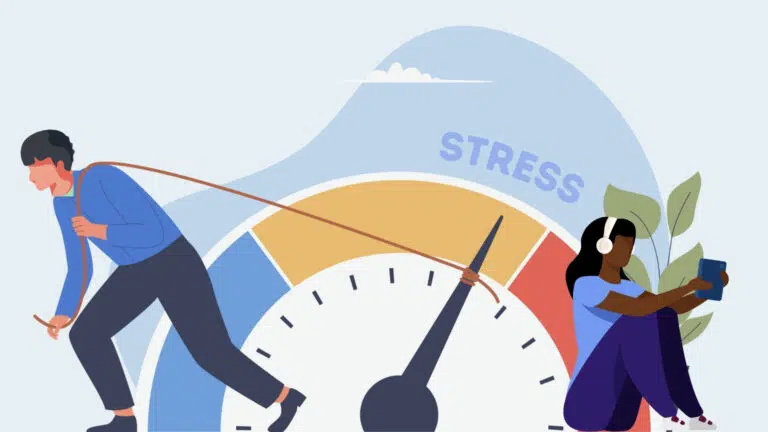
Feeling emotionally drained, mentally foggy, or like you’re running on empty?
You’re not alone and you’re not broken. These are common signs of burnout, a response to long-term exhaustion and stress-related overwhelm that many of us silently carry.
But the good news is: recovery is possible.
Burnout recovery is not about snapping back to normal. It’s a gentle, step-by-step journey back to yourself. One that prioritises rest, reflection, and rebuilding.
Whether you’re just starting to recognise the signs or already deep in the healing process, this guide will walk you through five key stages of recovery: awareness, rest, support, rebuilding, and prevention.
Throughout this guide, you’ll hear from OpenUp psychologist Britt Slief, who supports clients navigating the path out of burnout. Her insights remind us that healing isn’t linear, but with the right tools and support, it’s absolutely within reach.
Understanding Burnout Recovery
Feeling exhausted, disconnected, and not quite like yourself? You’re not alone and it could be burnout.
And to be honest here, the recovery process isn’t going to happen overnight. It’s more like a gentle healing journey back to yourself.
Burnout happens when your chronic workplace stress hasn’t been successfully managed. It’s that state of physical and mental exhaustion that leaves you feeling empty and overwhelmed.
The World Health Organisation officially recognised burnout as an occupational phenomenon in 2019. This recognition gave people the language for an experience they’d long been struggling with.
What does the road to recovery look like? Well, it’s not a simple on/off switch, it’s a gradual journey of recovery.
Some days you’ll feel progress, others you might feel stuck. That’s completely normal.
Recovering requires patience and self-compassion. Qualities that can feel far away when you’re in the thick of exhaustion.
Let’s explore what the common stages of burnout recovery are that Britt notices in her patients next.
The 5 Key Stages of Burnout Recovery
Burnout recovery isn’t linear, but most people move through a few recognisable phases as they begin to heal.
Think of these stages as gentle guideposts, not a strict checklist. They offer structure and reassurance during a time that can feel confusing or overwhelming.
Here’s a quick overview of the five key stages:
- Stage 1: Awareness & Acknowledgement – Recognising you’re burned out and giving yourself permission to slow down.
- Stage 2: Distancing & Rest – Creating space from stressors and prioritising deep rest.
- Stage 3: Support & Assessment – Leaning on your personal and professional support network.
- Stage 4: Rebuilding Health – Gently restoring your energy with sleep, movement, and nutrition.
- Stage 5: Reintegration & Prevention – Returning to work or life with new boundaries and habits in place.
Let’s explore each stage more deeply below.
Stage 1: Awareness & Acknowledgement
Recognise you’re burned out and release the ‘push through it’ mindset.
This stage begins with a realisation: “Something isn’t right.” Maybe you’re constantly tired, emotionally detached, or feeling unusually cynical.
You might notice:
- Constant fatigue, no matter how much you rest
- Headaches, digestive issues, or a racing mind
- Emotional signs like detachment from work or colleagues, irritability, or cynicism
Ask yourself:
- Am I constantly exhausted regardless of how much I rest?
- Have I lost the meaning or joy in activities I once enjoyed?
- Do I feel increasingly ineffective despite working harder?
One of the first signs you are recovering from burnout is simply acknowledging it exists. Britt shared: “One of my clients described this stage as “the moment I admitted I wasn’t just tired, I was unwell.”
This awareness creates space for healing that wasn’t possible when you were in denial.
Stage 2: Distancing & Rest
Create space between you and your stressors so your body and mind can recover.
Once you’ve acknowledged burnout, the next step is making room to breathe.
That might look like:
- Taking sick leave or holiday time if possible
- Reducing responsibilities temporarily
- Setting clear boundaries with work emails and calls
- Asking for help with family or household duties
If you normally work long hours, this stage might feel uncomfortable or even selfish. It’s neither. It’s essential medicine for your well-being.
Treating burnout always involves your sleep quality. Your body repairs itself during sleep, so prioritise a consistent schedule and create a calming pre-bed routine.
Even small buffers between you and your stressors can dramatically lower your stress levels. A 15-minute walk between meetings or a weekend without work emails can create valuable breathing space.
Stage 3: Support & Assessment
Burnout isn’t something you have to navigate alone.
Start with trusted friends or family. Simply saying “I’m struggling” out loud can be incredibly freeing. These conversations help normalise what you’re experiencing and remind you that burnout is a common response to prolonged stress, not a personal failing.
How to deal with burnout effectively almost always involves professional guidance.
Different support options include:
- Your GP for assessment of physical and mental symptoms
- Coaches who specialise in work-life balance challenges
- Therapists using approaches like Acceptance and Commitment Therapy
- Workplace resources like employee assistance programmes
At OpenUp, we specialise in supporting people showing early signs of burnout through coaching conversations and practical tools. “Just hearing a coach or therapist say ‘this makes sense’ can help you breathe again.” Britt adds.
For clinical burnout syndrome, we can refer our clients to iPractice who provide more intensive therapeutic support. Offering a holistic support package.
Stage 4: Rebuilding Health
Restore your body and nervous system, gently and gradually.
Forget dieting, think steady, kind nourishment with foods that are healthy and you love. The goal here is to eat regular meals with plenty of vegetables, proteins and healthy fats.
Sounds daunting? It doesn’t need to be!
Consider the 80/20 rule – eat healthy foods 80% of the time and “cheat” meals 20% of the time. Because we all deserve a cookie now and again!
Give your body the steady energy it needs to heal.
It may be challenging in the beginning, but you’ll slowly begin to notice your energy returning. Empowering you to return to the best version of yourself.
Additionally, something as simple as gentle movement can really support your burnout recovery.
The magic word here? Gentle.
These movements will help you reduce stress hormones and release mood-boosting endorphins.
Consider the following activities:
- Deep breathing exercises (even 2 minutes daily helps)
- Restorative yoga (less effort, more relaxation)
- Nature walks (which naturally regulate your nervous system)
- Meditation (starting with just 5 minutes)
This isn’t about perfect performance or pushing through pain. It’s about gentle, consistent care.
Stage 5: Reintegration & Prevention
Return to life with new boundaries, routines, and self-awareness.
As your burnout recovery progresses, you’ll gradually reintegrate into your normal routines but with crucial differences.
First, reflect honestly on what led to your burnout. Was it work overload? People-pleasing? Lack of boundaries? Understanding your personal triggers is essential for preventing burnout in the future.
Create sustainable habits to protect your time and energy:
- Schedule regular check-ins with yourself about stress levels (e.g. journaling)
- Build “buffer time” between commitments (e.g. rest periods between tasks)
- Prioritise activities that genuinely replenish your energy
- Use technology mindfully
- Maintain your support network
Work-life balance isn’t something you achieve once, it’s an ongoing practice of adjusting as your circumstances change. Learning how to avoid burnout means regularly reassessing what’s working and what needs adjustment.
Remember that maintaining your recovery is just as important as achieving it. Small, consistent actions are the key to lasting well-being.
Britt: “One client described it like this: “I used to say yes by default. Now I pause, check in with myself, and choose more consciously.”
How Long Does It Take to Recover from Burnout?
There’s no single answer to this question. Some people begin feeling better after a few weeks of deep rest. For others, recovering from burnout can take several months or even longer.
Research published in Frontiers in Psychology (2022) found that burnout recovery can take anywhere from several months to years, depending on:
- How long you’ve been experiencing chronic stress
- Whether you can remove or change the stressors
- The quality of your rest and support systems
- Any underlying health conditions
Healing happens in waves. Britt shares a gentle reminder: trust your own pace. Recovery is not a race, and your timeline doesn’t have to match anyone else’s.
Some days will feel energising, others may feel like setbacks. That’s normal. Progress is rarely linear but it’s happening.
Immediate Relief: Rest, Boundaries & Reducing Stress
While full burnout recovery takes time, there are steps you can take right now to start feeling better, even if you’re still working.
Here are some effective ways to reduce stress and protect your energy:
- Take micro-breaks: Step away from your desk for 5–10 minutes every hour
- Use mental health days when available
- Reduce workload: Talk to your manager about adjusting deadlines
- Set clear work-life boundaries: No emails after hours
- Block screen-free time in your calendar each day
- Practice guilt-free rest: You deserve well-needed rest, it’s essential
These changes reduce stress, protect your emotional capacity, and restore work-life balance. Even simple acts like saying “no” or turning off notifications are a form of burnout prevention.
Building a Sustainable Recovery Routine
Once you’re in the rebuilding phase, your daily habits become one of your strongest tools for recovery. The goal isn’t perfection, it’s consistency and compassion.
Start with:
- Gentle physical activity: Light movement like yoga or walking supports your nervous system
- Restorative nutrition: Fuel your body with consistent meals and hydration
- Better sleep hygiene: 7–9 hours, with a wind-down routine
- Joyful scheduling: Make time for creativity, connection, and moments of ease
- Deep breathing: Activate your parasympathetic nervous system with a few calm breaths daily
These routines help address the physical symptoms of long-term stress while nurturing your emotional health.
They’re not just about recovery, they’re key to how to treat burnout sustainably.
The Role of Therapy & Support Systems
Professional support can be a game-changer, especially if your burnout is linked to health conditions such as depression or anxiety.
Therapy helps you:
- Reframe unhelpful thoughts
- Manage stress and emotions
- Understand root causes of your burnout
Approaches like Cognitive Behavioural Therapy (CBT) or Acceptance and Commitment Therapy (ACT) are especially helpful for navigating prolonged stress.
But therapy isn’t the only path. Support can also look like:
- Talking to your GP
- Opening up to friends and family
- Joining a peer support group
- Using workplace coaching
At OpenUp, we provide coaching and mental health support for individuals and teams. If you need more intensive care, our clinical partner iPractice offers therapy for burnout and other mental health conditions.
Returning to Work After Burnout
Reintegrating into work can feel daunting, but it’s a key part of burnout recovery, especially when done with support and intention.
Here’s how to ease the transition:
- Phased return: Start with reduced hours or responsibilities
- Regular check-ins: Maintain open communication with your manager
- Know your limits: Monitor your stress levels and take breaks when needed
- Set boundaries: Protect your time and energy with clarity
Chronic stress doesn’t vanish overnight. Returning to work with new habits, tools and support systems can help you avoid falling into the same burnout patterns again.
Psychologist Britt often reminds clients that a successful return to work isn’t about “bouncing back,” but about moving forward differently, with more self-awareness and boundaries.
For Employers: Supporting Burnout Recovery in the Workplace
According to research done by BCG (2024), nearly 50% of workers experience burnout symptoms. That’s not just a personal issue, it’s a workplace responsibility.
Here’s how employers can support job burnout recovery:
- Create psychological safety: Encourage open conversations without stigma
- Offer flexibility: Let employees adjust schedules during recovery
- Manage workloads realistically: Prevent long-term exhaustion from creeping in
- Build a culture of prevention: Partner with platforms like OpenUp for early intervention
- Know your duty of care: Provide access to mental health support and burnout resources
Supporting employee well-being is more than a perk, it’s essential for healthy, sustainable, high-performing teams.
Preventing Burnout from Returning
The final (and ongoing) stage of burnout recovery is prevention. This means embedding habits that reduce stress and protect your emotional and physical health over the long term.
Try:
- Regular self-check-ins: Notice early signs of stress and address them early
- Protecting personal time: Rest isn’t optional, it’s part of resilience
- Mindfulness and deep breathing: Tools to regulate your nervous system daily
- Boundary reviews: Reassess what you say yes and no to regularly
- Staying connected: Isolation fuels burnout; community prevents it
Ongoing support, whether through coaching, therapy, or peer connection keeps you grounded and supported. At OpenUp, we’re here to help you and your team navigate stress before it becomes burnout.
With the right tools, awareness, and support, not only is recovery from burnout possible, it’s sustainable.
You deserve to feel well again. And you don’t have to do it alone.
FAQs about Burnout Recovery
How to deal with burnout?
Start by giving yourself permission to pause. Dealing with burnout often means stepping back, identifying what’s causing the overload, and making space to recover. It also helps to talk to someone: a therapist, coach, or trusted friend, to help regain clarity and plan your next steps.
How do I recover from burnout?
Burnout recovery starts with acknowledging your exhaustion and following a process. It often unfolds in five stages: Awareness and acknowledgement – Recognising that you’re burned out and admitting you need support. Distancing and rest – Creating space from the source of stress and prioritising sleep and downtime. Support and assessment – Leaning on friends, family, coaches, or therapists to understand your needs and track progress. Rebuilding health – Nourishing your body with food, movement, and rest to restore energy and stability. Reintegration and prevention – Gradually returning to work/life with clearer boundaries and sustainable habits. Recovery takes time, but progressing through these stages helps you move closer to long-term balance and resilience.
How to avoid burnout?
Avoiding burnout means listening to your limits. Prioritise rest, build in recovery time, and protect your work-life balance. Pay attention to early warning signs like fatigue or detachment, and set clear boundaries. Using mental health tools like those from OpenUp can help you stay balanced before stress takes over.
How to recover from burnout while still working?
Recovery while still working is possible, but it requires boundary-setting. Try to reduce non-essential tasks, block off time for rest, and avoid overcommitment. Communicate with your manager or HR about temporary adjustments. You might also benefit from coaching or tools that help you manage energy throughout the workday.
How long does it take to recover from burnout?
Burnout recovery typically takes between three months to a year, but it varies for everyone. Factors like the level of emotional and physical exhaustion, the stage at which you recognised burnout, your support systems, and whether you take meaningful steps toward recovery all impact the timeline. Some people experience faster healing with the right support; others may encounter plateaus or relapses.