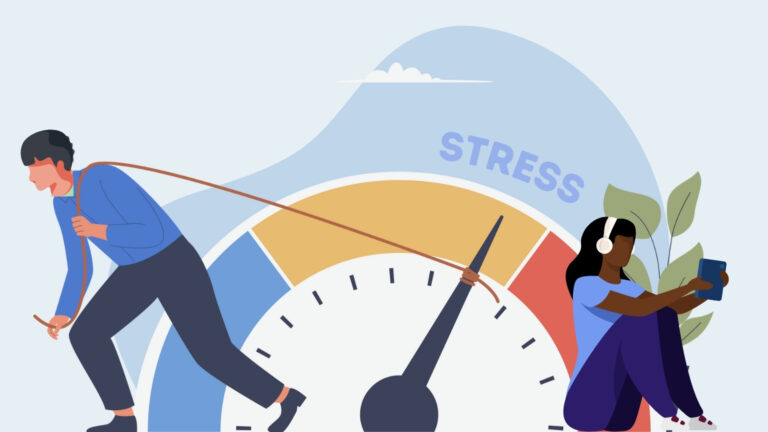
Work stress can feel heavy, but it can also be useful. If you use it well, stress can give you the energy and help you need to get more done.
While over 80% of workers report experiencing work-related stress, recognising its potential benefits can transform it into a driving force (Workplace Stress – Overview, 2025) Fortunately, there are proven ways to reduce work stress and restore balance.
This article shares practical ways to handle stress at work. You’ll find tips to help you focus, feel less tired, and keep a better balance between work and life.
You’ll also find additional insights from psychologist Britt Slief at OpenUp.
Quick Tips to Reduce Stress at Work
Imagine you’re at your desk, the clock ticking ever closer to your deadline. Email notifications ping incessantly, and your phone vibrates with yet another message from your team chat. Your heart races, and your stress levels begin to climb.
Try these stress-reducing techniques to help you feel calmer and more focused.
1. Take breaks to recharge
Taking breaks during your workday can help you feel less tired and give you more. Research by Albulescu et al., 2022, found that the longer the break, greater the improvement on performance. Try a quick walk, make tea, or look out the window. These breaks are good for you and your work.
Britt Slief, psychologist at OpenUp:
“People often think taking breaks is a waste of time, but they actually improve your focus and performance.”
2. Try breathing exercises or mini meditations
A few minutes of slow, deep breathing can help you relax (Blandini et al., 2027). Try box-breathing: breathe in for four seconds, hold for four, breathe out for four, and hold for four. Do this for one minute and see how you feel. This can quickly lower tension. If you do it often, it gets easier to stay calm.

3. Move during your working day
Moving your body helps you let go of stress (Physical Activity Reduces Stress, n.d). Even five minutes of walking or stretching can help. Try to move a bit every hour. You can set a small goal, like counting your steps before lunch, to keep yourself motivated.
4. Visualise a calm scene
Close your eyes and imagine a peaceful place, perhaps a quiet forest where the earthy scent of pine fills the air, or a tranquil beach with the sound of gentle waves lapping the shore. Feel the warmth of the sun on your skin and the cool breeze brushing your face. Focus on these sensory details. Visualising such calm scenes helps your body and mind relax quickly (Tusek & L., n.d.)
5. Listen to calming music
Listening to soft music or nature sounds can help you feel less stressed (Labbé et al., 2007.). Make a playlist you can use when you need to calm down.
6. Spend time on your favourite activity
Do something that brings you joy, like cooking, reading, or planning your next meal. Enjoyable moments help you recharge and boost your mood.
Britt suggests:
“Make a list of the things that give you energy. When you feel overwhelmed or tired, pick one and take time for it.”
👉 Summary: Take short breaks, breathe deeply, move your body, visualise a calm scene, listen to music, and make time for what you love. These small actions help you ease stress and improve your focus throughout the working day.
Long-Term Habits for Managing Stress at Work
Good routines help you deal with stress and support your mental well-being.
1. Stay physically active
Exercise lowers stress and helps you feel better. Walking, yoga, or cycling are all good options. If you are busy, even a short walk at lunch helps.
2. Sleep enough and rest well
When you don’t get enough sleep, stress feels worse (Minkel et al., 2014). Treat sleep as a skill you can improve. Try a wind-down routine and aim for 7 to 9 hours each night. Avoid screens before bed to help you rest.
Britt adds:
“A bad night’s sleep can make small problems feel big. Good rest helps your brain and body recover so you can focus better the next day.”
3. Eat a healthy diet
Eating more vegetables, fruit, and healthy fats helps keep your energy steady (Radavelli-Bagatini & Simone, 2021). Try not to eat too much sugar when you feel stressed. Healthy food is good for your body and mind (Radkhah et al., 2023).
4. Make time to recharge (and prevent burnout)
Use weekends and holidays to rest. Make time each day to relax, even if it’s just a short walk or doing nothing. Rest helps you handle stress over time.
Britt remind us:
“Many people fill their free time with obligations. True rest also means doing nothing and that’s okay.”
5. Improve your time management
A busy schedule can make you feel more stressed. Focus on what is most important and urgent. Break big tasks into smaller steps to make them easier.
Additionally, embrace the power of saying no by linking each ‘no’ to a higher-order value, such as family time or personal health. Seeing ‘no’ as ‘saying yes to what truly matters’ can make boundary-setting feel purposeful instead of defensive.
Remember, stress is often more stressful than the workload itself.
“It’s not always the amount of work, it’s the feeling of losing control that causes stress.”
👉 Summary: Moving more, sleeping well, eating healthy, and managing your time all help you handle stress at work in the long run.
Changing Your Mindset to Handle Workplace Stress
How you think about work changes how much stress you feel. These tips can help you handle stress more effectively.

1. Practise mindfulness
Mindfulness helps you stay present without judgement. Even 5–10 minutes per day can reduce workplace anxiety and increase focus (Schellinger & Wexler, 2023).
Britt shares:
“Mindfulness has many forms, breathing, using your senses, or a short self-check-in. Explore what works best for you.”
2. Reframe negative thoughts
Try to see stress in a more positive or realistic way. Mistakes can help you learn.
Britt helps remind us:
“Instead of saying ‘I’m bad at my job,’ try ‘this task is challenging, but I can learn.’”
3. Practise gratitude
Write down three things you are grateful for each day. This helps you focus on the good and feel better. A simple way to be a more positive person.
4. Use positive self-talk and compassion
Be kind to yourself. Swap harsh thoughts for encouraging ones. Self-compassion helps you handle stress better.
5. Journal your thoughts
Writing can help you sort out your thoughts and feelings.
Britt shares a helpful tip for getting started with journaling:
Try reflecting on: “What was the most stressful moment today, and what helped me deal with it?”
👉 Summary: Mindfulness, gratitude, journaling, and being kind to yourself all help you handle stress and stay focused.
Work-Life Balance: Setting Boundaries to Reduce Work Stress
With remote work and lots of notifications, setting boundaries is important for lowering your stress and staying healthy.
1. Define clear working hours
End your workday on purpose. Close your laptop, tidy your desk, or take a walk. These habits help you switch off from work. Even something as simple as saying to yourself, “I’m done,” at the end of your workday can help.
Britt shares:
“A clear end-of-day routine helps your brain transition from work to rest.”
2. Limit digital distractions
Check messages and emails at certain times. Turn off extra notifications so you can focus and feel less overwhelmed.
3. Create a supportive workspace
A comfortable workspace helps you feel better and work well. Adjust your chair, lighting, and desk to suit you.
4. Stay socially connected
Remote work can feel lonely (Arnett, 2022). Making time to talk with friends or colleagues can help you feel socially connected and fight stress.
Britt adds:
“I see many people feel isolated while working online. A short chat with a colleague can make a big difference.”
👉 Summary: Setting boundaries, limiting digital distractions, and staying in touch with others help you balance work and protect your health.
How Support Can Help You Manage Stress at Work
You do not have to deal with work stress by yourself. Asking for help is a sign of strength.
1. Talk to your manager or HR
Talk about your workload and what matters most. Changing plans or expectations can help lower stress.
2. Use workplace well-being programmes
Many workplaces offer coaching, workshops, or counselling. Using these can help your mental health.
3. Build a support network
Colleagues, friends, and family can support you and help you see things more clearly when you feel stressed.
4. Reach out for professional help
If stress causes anxiety, poor sleep, or low mood, talk to a psychologist. Research shows that techniques such as CBT are effective in reducing levels of workplace stress (Catapano et al., 2023). Getting help early makes recovery easier.

Britt reminds us:
“Don’t wait until stress becomes too much, early support really makes a big difference.”
👉 Summary: Talk to your manager, use support at work, and reach out for help if you need it. You do not have to handle stress alone.
Final Thoughts
Fighting stress at work is about small, steady steps. Use quick fixes and build good habits for lasting balance. Consider keeping a simple log or journal to track your progress. Not only can this help you stay motivated, but it also allows you to see the benefits of your stress-reducing efforts over time.
👉 Feeling stressed at work?
FAQs Managing Stress at Work
What helps against work stress?
Short breaks, regular movement, and mindfulness practices are some of the most effective ways to reduce workplace stress. Try incorporating micro-breaks and breathing exercises into your working day to restore energy and focus. Setting clear boundaries between work and personal time also helps prevent constant pressure. When you feel overwhelmed, step away from your desk, breathe deeply, and give yourself a few minutes to reset.
How can you manage stress at work?
Effective stress management at work starts with organisation and open communication. Prioritise tasks and break large projects into smaller, manageable steps to avoid feeling overwhelmed. Talk openly with your manager or colleagues about your workload and expectations. Combine good time management with healthy habits like movement, proper breaks, and self-reflection to keep your mental well-being steady.
How can you quickly ease stress at work?
If you notice signs of stress building up, focus on quick recovery techniques. Try deep breathing exercises to calm your nervous system, go for a short walk, or listen to soothing music. Physically stepping away from your workspace helps your body release tension and your mind regain clarity. Even small actions can interrupt the stress cycle and bring you back to balance.
How can I protect myself from long-term work stress?
Preventing long-term stress requires building sustainable routines that support both physical and mental health. Focus on regular physical activity, consistent sleep, and a healthy diet to maintain stable energy levels. Make time for recovery, social connection, and reflection so stress doesn’t accumulate over time. When you learn to recognise early signs of stress, you can act sooner and protect your well-being for the long term.
How can I fit these stress-reducing habits into a packed workday with back-to-back meetings?
Integrate small moments of recovery into transitions between meetings. Try one-minute breathing exercises before your next call, stand up to stretch while joining a video meeting, or take a short walk while listening to an audio-only session. Schedule five-minute buffers in your calendar to reset. Consistency is more important than duration, even micro-breaks help prevent stress from building up.
What if my workplace culture discourages taking breaks or setting boundaries?
Start by setting a personal example and sharing the science behind recovery and productivity. Frame boundaries not as avoidance, but as strategies for better performance. You can also introduce small cultural changes, such as suggesting walking meetings or ‘focus hours’, that make well-being a shared goal rather than a personal preference. Small steps often inspire others to follow.
Are there specific strategies for managing stress unique to remote or hybrid work environments?
Remote work blurs the line between home and work, so deliberate structure is key. Set a clear start and end time for your workday, create a dedicated workspace, and plan social check-ins with colleagues. Regular video-free breaks reduce screen fatigue. Building small rituals, like tidying your desk or stepping outside, helps your brain transition between roles and prevents burnout.
How can managers support their teams in adopting these stress management practices?
Managers play a vital role in shaping healthy workplace habits. Encourage team members to take breaks, use flexible schedules, and discuss workload openly. Recognise effort, not just output, and model balance yourself. For instance, by logging off on time or taking walking meetings. Open conversations about mental health normalise stress management and foster a culture of trust.
What are some ways to stay motivated and consistent with these habits over time?
Consistency builds resilience. Track your habits weekly, celebrate small wins, and remind yourself why you started, to improve focus, boost mood, and gain more energy. Pair new habits with existing routines (like stretching before your morning coffee) to make them automatic. When you miss a day, restart without guilt; progress, not perfection, keeps the habit alive.