
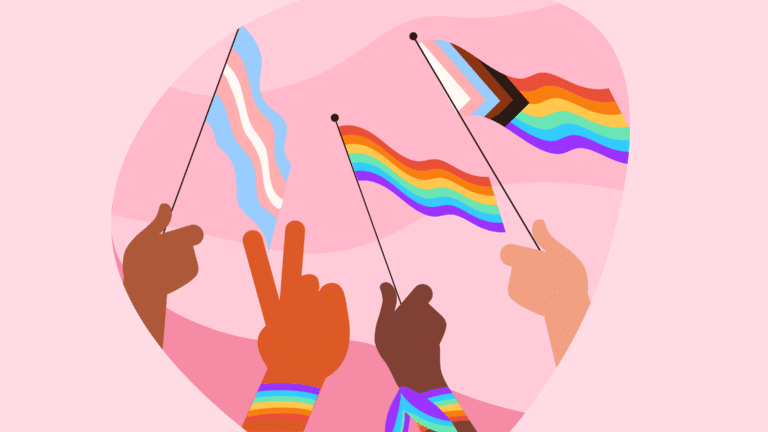
Pride Month takes place every June in a number of major cities worldwide; such as New York, London, Barcelona, and Rome. Some other cities choose to celebrate Pride in later months; for example, in Amsterdam, Pride will take place in August.
Beyond colourful parades and vibrant celebrations, Pride is a time to honour the accomplishments and recognise the challenges faced by individuals within a diverse community. In this article, we’ll explore the essence of Pride, and how to enhance mental well-being by embracing acceptance and inclusivity.
What is Pride?
Pride is an annual celebration of lesbian, gay, bisexual, transgender, queer, and more LGBTQIA+ identities. Although Pride is now celebrated in numerous countries worldwide, it started out as a protest, with June 28, 1969 marking the start of the Stonewall riots. On this day, members of the community fought back against a police raid at a queer bar in Manhattan, New York. Media coverage allowed society to see the struggle and created more awareness about the need to stand up for equal rights.
Although our society has come a long way in supporting the LGBTQIA+ community, progress is never linear and there is still much work we need to do. This is one of the reasons why we celebrate pride: to contribute to creating a more inclusive and equitable society.
In essence, Pride is about making others feel valued and accepted, regardless of their sexual orientation or gender identity. When we celebrate and embrace diversity, we are taking positive steps towards improved mental well-being.
“Equality means more than passing laws. The struggle is really won in the hearts and minds of the community, where it really counts.” – Barbara Gittings
What Can We Learn From Pride?
Pride provides us with an excellent opportunity to celebrate the many dynamic LGBTQIA+ communities and our wonderfully diverse workforce. It can teach us to be more open-minded and accept others as they are.
Pride can also teach us how to show solidarity for people who may not feel comfortable enough to be their authentic selves. Of course, making each individual feel psychologically safe is a cornerstone of mental well-being.
Pride also helps us to feel valued and accepted by society, which is integral to maintaining mental well-being. Let’s take a look at how celebrating Pride can enhance mental well-being for all:
1. Connection
Connection is a cornerstone of mental well-being. Pride offers a powerful reminder that no one is alone. For many LGBTQIA+ individuals, Pride events, communities, and stories help foster a deeper sense of inclusion and belonging. Through shared celebration, meaningful conversations, and visible support, Pride strengthens social bonds and reminds people that they are valued.
2. Identity
When people feel affirmed in their identity and respected for who they are, it creates a powerful foundation for mental well-being. Pride offers a chance to celebrate openly and proudly, often in the company of others who share or support that journey. This shared experience can be deeply validating**,** helping individuals feel more confident, more understood, and more at peace with who they are. Celebrating identity in a public and positive way reinforces that everyone deserves to be accepted, just as they are.
3. Allyship
Pride often inspires members of society to show their support and advocate for the community in the form of allyship, which Harvard Business Review defines as: ‘’a lifelong process of building and nurturing supportive relationships with underrepresented, marginalised, or discriminated individuals or groups with the aim of advancing inclusion.’’ Allies can offer a safe space and a source of encouragement when things are tough.
4. Representation
Pride can play a powerful role in enhancing mental well-being by providing the representation that LGBTQIA+ individuals need and deserve. It’s essential that people see LGBTQIA+ individuals reflected across all areas of society – in workplaces, leadership, media, education, and beyond. This kind of visibility not only affirms individual self-worth but also helps foster a more inclusive, accepting society where everyone can thrive.
5. Giving back
Research shows that giving back is good for our mental well-being. It provides us with a sense of purpose, belonging, and gratitude. Getting involved in group activities such as Pride can leave you feeling more positive, as you contribute to the greater good. Whether you are participating in a march, organising a meet-up or contributing to a cause, the chances are that you will feel great doing so!
How Your Organisation Can Support the LGBTQIA+ Community
Fostering awareness of the LGBTQIA+ community is a great starting point for your organisation. But awareness alone is not enough – it’s the concrete, ongoing steps towards creating a culture of inclusion that truly make a difference.
Consider these important questions as you assess your organisation’s inclusivity:
🧑🏿💼 How do we listen to our LGBTQIA+ and minority group employees?
🗣️ How do we encourage individuals to share their experiences, and how do we empower them to raise their voices – without pressuring them to do so?
🤝 How can we make everyone feel like they truly belong?
🧩 What practical steps can we take to support LGBTQIA+ individuals in our workplace?
Take Action and Stay Accountable
Ensure your organisation and its leaders are actively working to make LGBTQIA+ employees feel safe, included, and supported. Here are some steps to guide you:
- Use inclusive language: Share your pronouns if you’re comfortable. Avoid making assumptions about someone’s gender or pronouns based on appearance.
- Ask open questions – and truly listen: Stay curious and open-minded. You never know what you might learn by listening to someone else’s lived experience.
- Take an interest in people as individuals: Learn more about the diverse backgrounds, identities, and communities that make up your workplace.
- Include LGBTQIA+ employees in DEI conversations – but don’t overburden them: Value individual employees’ lived experiences, input, but never expect them to carry the emotional or educational labour if they’re not comfortable doing so.
Feeling valued, accepted, and recognised for our identities is essential for our mental well-being. Displaying genuine care, curiosity, and a willingness to learn goes a long way in supporting diverse communities, not just for Pride Month, but year-round.