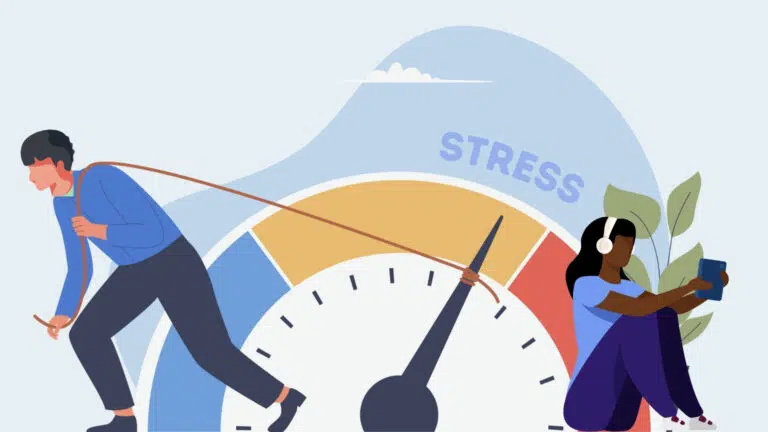
Sleeping well, eating healthily, getting enough exercise…If we want to stay physically fit and healthy, we all know what to do. But not everyone has learned how best to take care of their inner world and emotions. So, how do you do that? And why is it important to devote some attention to this each day?
Looking after your mental well-being each day should feel as normal as brushing your teeth. Psychologist Pia Linden is going to explain why it is so important and what you can do about it.
Take it day by day
Pia: “There’s an old Chinese proverb: ‘How do you eat an elephant? One bite at a time’. As with many things, it’s better and easier to take a small step each day than to wait for your feelings to build up and then feel overwhelmed,” explains Pia.
‘How do you eat an elephant? One bite at a time’
Checking in with yourself each day and actively taking care of your mental well-being is a form of maintenance and prevention.
Pia: “Our mental well-being isn’t something we should only think about when we aren’t feeling so great. If you’re aware of what’s going on with you each day and taking small steps to tackle this, it becomes much easier to process something ‘big’ or ‘heavy’ every now and then. You can withstand a knock to your mental well-being.”
The advantages of ‘mental well-being maintenance’
Paying attention to your emotions each day helps to stop your bucket from ‘suddenly’ overflowing – in a bad way. But it’s more than that. You’ll notice the positive effects in all areas of your life.
Pia: “By devoting some time and attention to your mental well-being each day, you’ll get more in touch with yourself and your emotions. You’ll develop a better understanding of yourself and get more insight into your thoughts, feelings, and moods. This means you’ll get better at regulating your emotions; a higher degree of mental well-being means a higher degree of emotional intelligence.”
All these benefits aren’t just awesome for you as an individual, they also have a positive effect on the people around you. “Being more connected to your inner world and having the ability to understand your thoughts and feelings, as well as being able to communicate them, also improves your relationships,” continues Pia. “What’s more, you can set an example for other people. It’s always good to talk about this!”
Building your ‘mental well-being toolkit’
So, you need to be taking small steps each day, but how can you do this effectively? Pia: “First, you need to figure out what feels good for you and your mental well-being. This is different for everyone. Try to put together a toolkit for yourself that you can draw on each day.”
To help you out with this, Pia shares a few exercises:
1. Check in with yourself
“Have regular moments of quiet time. Put your to-do list to one side and do nothing, even if it’s only for a few minutes. Look inward, ask yourself how you’re feeling today and if there’s anything you’d like or need. Drink a cup of tea, look out the window, go for a walk, call your mother…whatever feels good for you.”
2. Focus on the positive
What’s going well in your life? Can you look back on the positives and celebrate what you’ve accomplished? “People naturally have a so-called ‘negativity bias’; we often focus on the things that are going (or could go) wrong, and we tend to take the things that are going well for granted,” Pia explains.
3. Practice non-judgmental awareness
Pia: “Not everything we think is true. We often think in a biased or negative way and this has a direct impact on our mood. Thoughts we might have include ‘Why am I always messing up?’ or ‘Should I have handled this differently?’. But we also think these thoughts about other people: ‘Why is that person acting this way?’.
Try to be conscious of this and to reflect on your assumptions, opinions, and expectations. Is what you’re thinking true? Can you reframe certain thoughts or let them go?”
💡 For further reading see: Feeling Inadequate: How to Tackle that Little Voice in Your Head
4. Be kind to yourself
“We’re often very hard on ourselves,” explains Pia. “That means it’s good to pay attention to the way you speak to yourself. Try to be just as kind and compassionate to yourself as you’d be to a close friend or loved one.”
And yes, that can sometimes be more challenging than you’d think. “If you’re struggling with this, then practice with positive affirmations, such as ‘I am enough just as I am’ or ‘I love myself and I take good care of myself’.”
5. Set boundaries when necessary
“We sometimes agree to do things because we want to do right by everybody. But to look out for ourselves, we sometimes need to say no when somebody asks us to do something. And that’s okay!” Says Pia.
If you have difficulty saying no, then ask yourself why it’s so hard for you. Which beliefs are the cause of this? Try to focus on the (good) feeling you get when you do say no. Then practice actively saying no; it’s definitely a skill that you can hone.
How do you do that? Here’s how to get better at choosing yourself
6. Practice mindfulness
“Every day, practice mindfulness and meditation. Consciously pausing and choosing moments when you don’t have to ‘do’ anything and can instead simply ‘be’, helps you to gain insights into your thoughts and feelings,” explains Pia.
What’s more, meditation helps you to achieve a better emotional balance in a long-lasting way and makes you better at processing your emotions. Simply meditating for five to ten minutes every day when you wake up or before you go to sleep at night makes a huge difference.
7. Keep a (gratitude) journal
Each day, write down the most significant events, thoughts, and feelings that you experienced. When doing this, consciously focus on the things that you’re grateful for.
Pia: “Various studies show that cultivating positive emotions, such as gratitude helps to increase your resilience and happiness. This doesn’t mean that you need to ignore your negative emotions – they’re definitely allowed to exist as well – but it can sometimes help to shift your focus and create a more optimistic view of life.”
When will you notice the difference?
It might be that by doing these exercises, you suddenly learn new things about yourself that make you feel better or more fulfilled the very next day. But know that, in general, it’s often more of a slow, gentle process.
Pia: “It may be that you’ll only notice the difference when you realise that something you used to struggle with isn’t bothering you as much anymore. Of that you’re getting increasingly better at handling difficult situations, emotions, and thoughts. Be patient. Devoting conscious attention to your mental well-being on a daily basis might not bring about an obvious change right away, but everything you do will compound over time.”
Make it a daily habit
Creating a new routine or habit in your life is always a challenge. How are you supposed to do this and keep it up?
Pia: “Try combining your new ritual with an existing habit. If you brush your teeth every evening, for example, you could pair this with another moment of self-care. Maybe try a five-minute meditation or writing down the positive things that happened that day.”
Oh, and one last tip: Start small and practical. Choose just one thing to begin with, pick a time each day and a location, and challenge yourself to do it for a minimum of 30 days. This way, you’ll increase your chances of sticking with it for a long time, even after that initial period.
💡 For further reading see: Small Steps to Start Caring for Your Mental Well-being Today
Need help? Talking about it usually does the trick
Taking good care of your mental well-being is essential if you want to lead a nice, well-balanced life. It helps to talk about what you’re going through. Could you use some help here? Schedule an introductory consultation with Pia or one of our other psychologists, we’re happy to support you.