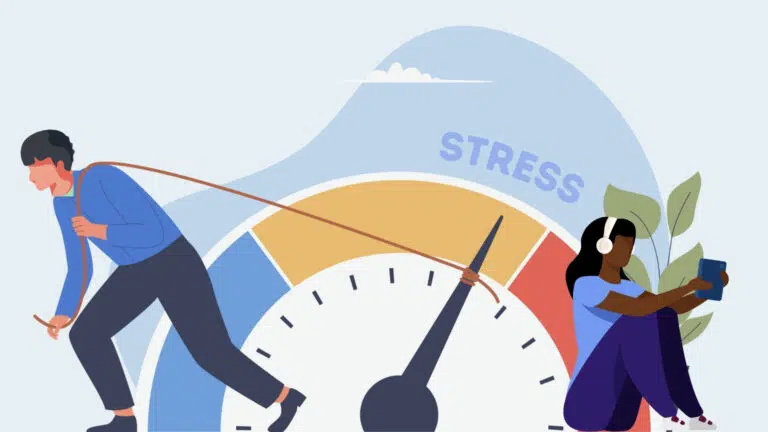

Chronic stress is not a personal failing. It is your body’s way of telling you that something needs to change. Like a warning light on your car’s dashboard, it signals that you need to pay attention and take care of yourself. While short-term stress can help you focus, ongoing stress wears you down and makes it harder to recover.
According to psychologist Britt Slief from OpenUp (whose insights you’ll hear from in this article), chronic stress often develops gradually:
“People usually only recognise it once the symptoms have built up.”
In the UK, 75% of people noted that they are overwhelmed or unable to cope at some point in the year (Mental Health Foundation, 2018).
The good news is that you can manage chronic stress, and recovery is possible.
What Is Chronic Stress?
Your body responds to stress with a fight-or-flight reaction, activating the sympathetic nervous system and releasing stress hormones like adrenaline and cortisol through the hypothalamic-pituitary-adrenal axis.
During acute stress, your heart rate and alertness rise temporarily, and calm returns once the challenge passes. But when stress continues over a long period, the body remains on high alert, and that’s when chronic stress develops.
As the Dutch RIVM defines it:
“Chronic stress occurs when stress is long-term, and the body can no longer recover.”
Your system stays switched on, your energy drains, and your resilience declines.
Britt explains:
“Chronic stress is essentially a dysregulation of your stress response; your body stays ‘on’ even when there’s no immediate reason.”
How Common Is Chronic Stress?
Recent UK data shows that chronic and work-related stress remain major public health challenges:
- Prevalence: An estimated 776,000 workers in Great Britain suffered from work-related stress, depression, or anxiety in 2023/24, leading to 16.4 million lost working days (HSE, 2024).
- Economic impact: Work-related stress costs the UK economy £28 billion per year (AXA, 2024).
- Workplace culture: Only 32% of UK workers say their workplace has measures in place to identify and prevent burnout (Mental Health UK, Burnout Report 2025).
- Social inequality: Financial pressures remain a key driver; 22% of UK adults cite debt as a major source of stress, while 36% link stress to their own or a family member’s long-term health condition (Mental Health Foundation, 2018).
These statistics show chronic stress is prevalent and shaped by occupational and living conditions. Understanding it is the first step to fighting it.
Causes of Chronic Stress
Chronic stress usually builds up from several ongoing problems, not just one. Some common causes are:
- High workload or study pressure: Ongoing deadlines, overwork, and unclear expectations.
- Financial worries or debt: Economic uncertainty keeps your stress system constantly activated.
- Relationship issues: Conflicts or a lack of emotional support at home can raise stress levels.
- Poor housing or unsafe environments: Living in unhealthy conditions adds daily strain.
- Health problems or trauma: Long-term illness or caregiving responsibilities can reduce resilience.
- Social isolation: Lack of social connection increases emotional stress.
- Work-life imbalance: Irregular hours, taking care of loved ones, or constant availability can prevent recovery.
- Conflict or discrimination at work: These ongoing pressures sustain chronic tension.
Britt shares:
“One client was going through a divorce, had financial worries, and faced high work pressure. Each issue was heavy on its own, but together, they kept her body in fight-or-flight mode.”
Symptoms of Chronic Stress
Chronic stress affects you physically, mentally, emotionally, and in your behaviour.
Physical signs commonly include:
- Persistent fatigue or low energy
- Headaches, tense muscles (neck, back, shoulders)
- Heart palpitations or increased heart rate
- Stomach or digestive problems
- Sleep problems (difficulty falling or staying asleep)
- Lower immune system function
Mental and emotional symptoms include:
- Difficulty concentrating or forgetfulness
- Worrying, anxiety, or feeling restless
- Irritability, mood swings, or sadness
- Cynicism or feeling detached
- Reduced motivation or enjoyment in activities
Behavioural signs can also appear:
- Withdrawal from social contact
- Changes in appetite or reliance on caffeine/alcohol
- Procrastination or disorganisation
- Neglecting self-care or over-controlling behaviour
Britt shares an example out her practice:
“Do you remember the client I mentioned earlier, the one going through a divorce, dealing with financial worries, and facing high work pressure? With her, I saw exactly this pattern. It started with physical symptoms like fatigue and tense muscles. Later, her mood became more negative, and she began withdrawing from social contact more often. This shows how chronic stress can gradually spread from the body to emotions and behaviour.”
If you notice these symptoms for weeks or months, it’s important to address them. Long-term stress can lead to burnout, anxiety, or depression.

Effects of Chronic Stress on the Body
Chronic stress can seriously affect your body and mind over time:
- Hormonal imbalance: Constantly elevated cortisol (a stress hormone that helps regulate energy and alertness) and other stress hormones can lead to weight gain, diabetes, and reduced immune function (Giaguli et al., 2023).
- Brain effects: Chronic stress alters the amygdala, hippocampus, and prefrontal cortex, heightening anxiety and impairing memory and concentration(Kim et al., 2019).
- Heart and blood pressure: Long-term stress raises blood pressure and risk of cardiovascular disease.
- Mental health: It increases the likelihood of depression, anxiety, and emotional exhaustion (Bhatt et al., 2021).
- Impaired functioning: It hampers decision-making and encourages unhealthy routines, fueling a cycle of stress and avoidance.
Britt adds:
“Chronic stress doesn’t just make you tired; it changes how your brain and body function. Relationships can suffer too, as your patience and energy decline.”
When Does Stress Become Chronic?
Stress becomes chronic when it lasts for weeks or months without enough time to recover.
The Dutch RIVM defines it simply:
“Stress is chronic when it continues long-term and the body can’t recover.”
With chronic stress, you may still feel tired, tense, or unable to relax even after the stressful situation has passed. These are signs to watch for.
How to Reduce Chronic Stress
To reduce chronic stress, focus on both what is causing your stress and how you recover from it.
1. Identify your stressors
List your main stress triggers: work pressure, finances, relationships, or health.
Use the following prompts to reflect on your situation:
- Which stressor drains you most?
- Who could help?
Figure out what you can change on your own and where you need help. If money is a problem, talk to a financial coach. If work is stressful, speak with HR or your manager.
2. Seek professional help early
Don’t wait too long to ask for help. Talk to your doctor or a psychologist. Therapy or coaching can help you understand your stress and learn ways to cope.
3. Learn about stress
Learning how stress hormones like cortisol affect your body can help you better understand yourself. Knowing what’s happening makes it easier to make good choices.
4. Build recovery moments into your day
Rest is key to recovering from chronic stress. Try these ideas:
- Physical activity: Walking, cycling, or yoga reduces cortisol and boosts endorphins.
- Breathing and relaxation exercises: Box breathing, mindfulness, or progressive muscle relaxation can calm the stress response.
- Nature exposure: Spending time outdoors lowers blood pressure and restores balance.
- Sleep and routine: Go to bed and wake up at the same time each day, and try to avoid screens before sleeping.
- Social support: Talking to friends or family helps you cope with stress and gain perspective.
5. Maintain a healthy lifestyle
Long-term stress can make it easy to slip into unhealthy habits. Instead, try to:
- A balanced diet and reduced caffeine/alcohol intake
- Regular breaks from screens
- Activities that make you feel good and give energy
6. Set clear boundaries
Chronic stress can happen when you say yes too much. Practice saying no and let others know your limits. For example, you might say, “I’m at capacity this week, can we talk about this on Monday?”
7. Take a holistic approach
Chronic stress is often connected to things like housing, money, or health. Getting help from both mental health professionals and practical support services can make a big difference.
Recovery from Chronic Stress: Step-by-Step
It takes time to recover from chronic stress, but it can be done. Here are some steps to help:
- Notice the signs: Pay attention to how you feel, both physically and emotionally. See a doctor if you are unsure.
- Take time off work if you need to: Even a short break can help prevent burnout. Talk to your company doctor about your options.
- Rest and rebuild structure: Create daily routines that include rest, nutrition, and gentle movement. Avoid major decisions at this stage.
- Seek support: Work with a psychologist or coach to identify stressors and build coping strategies.
- Solve underlying problems: Address root causes like debt, workload, or housing issues.
- Gradually reintroduce activity: Return to work step by step, starting small and checking in with your energy levels.
- Stay alert to relapse: Continue using stress management exercises and prioritising recovery.
Final Thoughts
Chronic stress is not a weakness. It is your body’s way of telling you that something is off. Noticing it early can help you take care of your health and find balance again.
You do not have to handle this by yourself. Reach out to someone you trust, get professional help if you need it, and give yourself the care you deserve. Taking one small step can help you build your resilience over time.
Britt concludes:
“The most important thing is to stay hopeful; recovery is always possible, even if it takes time.”
FAQs About Chronic Stress
What are the symptoms of chronic stress?
Chronic stress can cause physical symptoms (fatigue, headaches, rapid heart rate, sleep problems), mental symptoms (worrying, forgetfulness, irritability), and behavioural changes (social withdrawal, overeating, poor focus). If these last for weeks or months, it’s a sign to take action.
How can you recover from chronic stress?
Recovery involves reducing stressors and increasing recovery time. Seek professional help, set clear boundaries, move regularly, and practise relaxation techniques. Combining rest, social support, and lifestyle changes helps reset your stress response.
What does long-term stress do to your body?
Prolonged stress affects your hormones, immune system, and mental health. It can raise blood pressure, weaken your immunity, and increase the risk of chronic illnesses like heart disease or diabetes.
Is chronic stress reversible?
Yes. The body’s stress system is adaptable, but recovery takes time. By addressing root causes, improving sleep, diet, and activity, and learning how to manage stress, you can restore balance and resilience.